
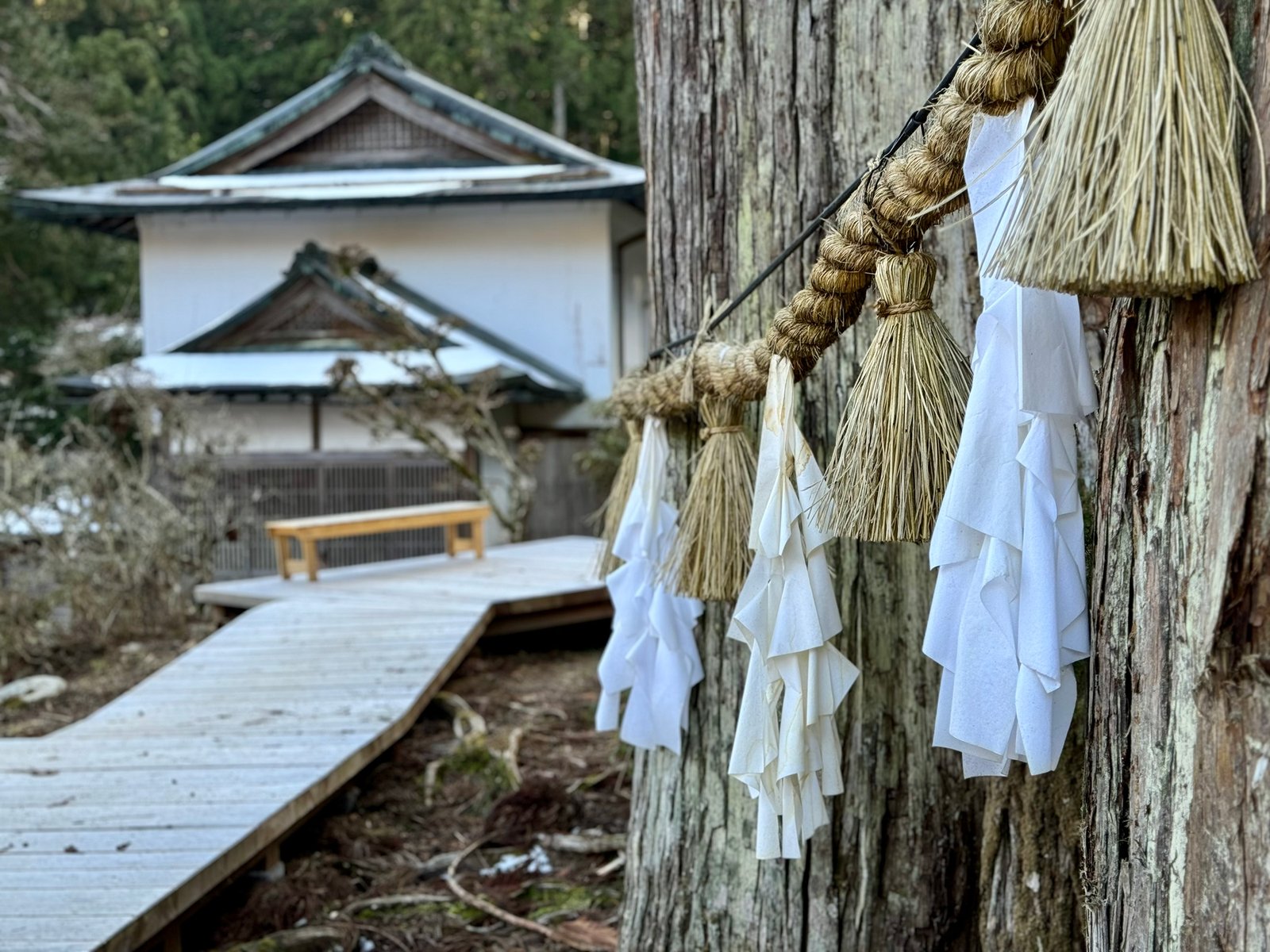
Koyasan (高野山) is a mountain town in Wakayama Prefecture that has served as the heart of Shingon Buddhism for over a millennium. It was founded in 816 by the monk Kobo Daishi, one of Japan’s most revered spiritual figures, who chose this eight-peaked basin because it resembled a lotus flower. But those historical facts didn’t quite prepare us for the physical sensation of arriving there – the slow, rhythmic cable car climb through ancient cedar forests, the way the air cooled and thinned as we ascended, and the profound quiet of a place that has been continuously prayed in for twelve centuries.
As seasoned Japan travelers, we were searching for something genuinely different when planning our early spring trip. Of course, we wanted to experience the iconic sakura – the fleeting beauty of the cherry blossoms (which I’ll share in another post) – but we were also looking for an experience that would ask a little more of us than the neon pulse of Tokyo or the crowded shrines of Kyoto.
When a friend recommended a shukubo (temple lodging) at Koyasan, we added it to our itinerary at the last minute. We scrambled to navigate the unique logistics of temple bookings and found the very last room available at Shojoshin-in, one of the village’s oldest and most storied temples. We booked it immediately, not quite knowing what to expect from a night behind temple walls.
It turned out to be the part of the trip we talked about most afterward.
Table of Contents
Day One: Arrival
First Temples, First Snow
We hadn’t expected snow.
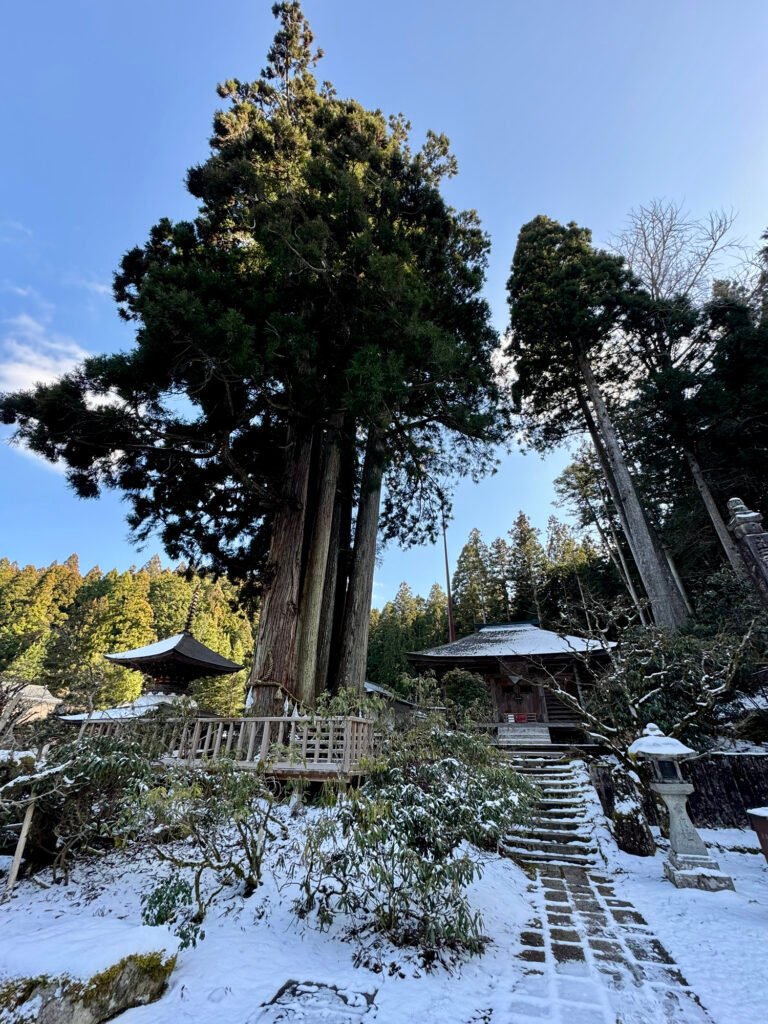
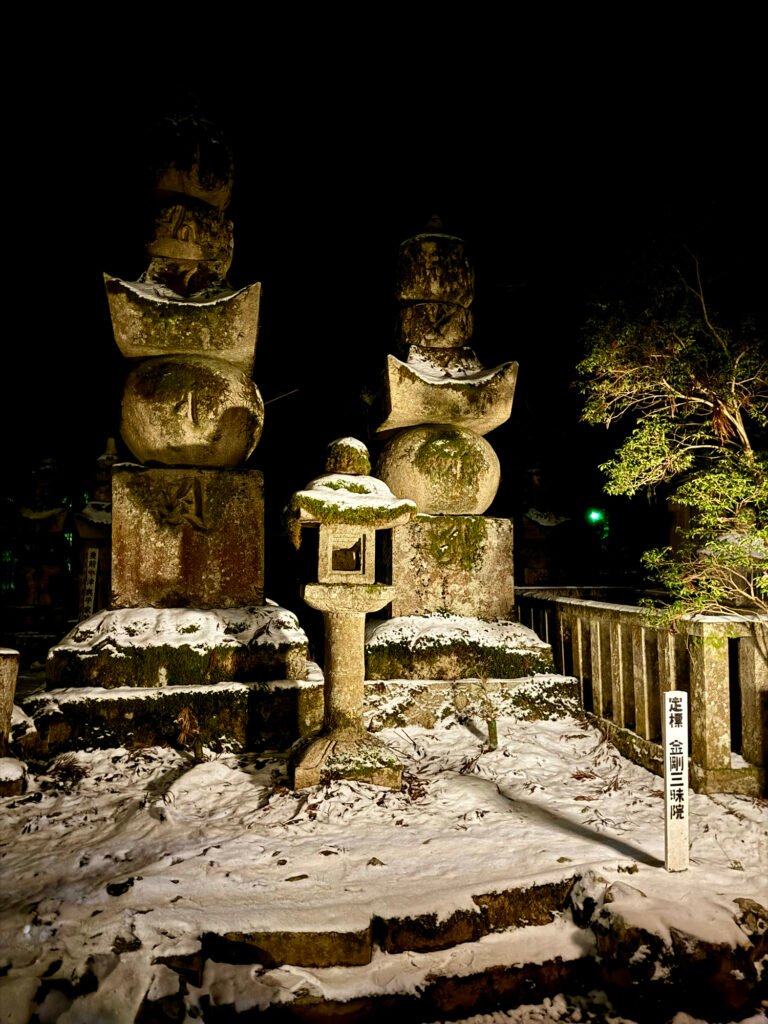
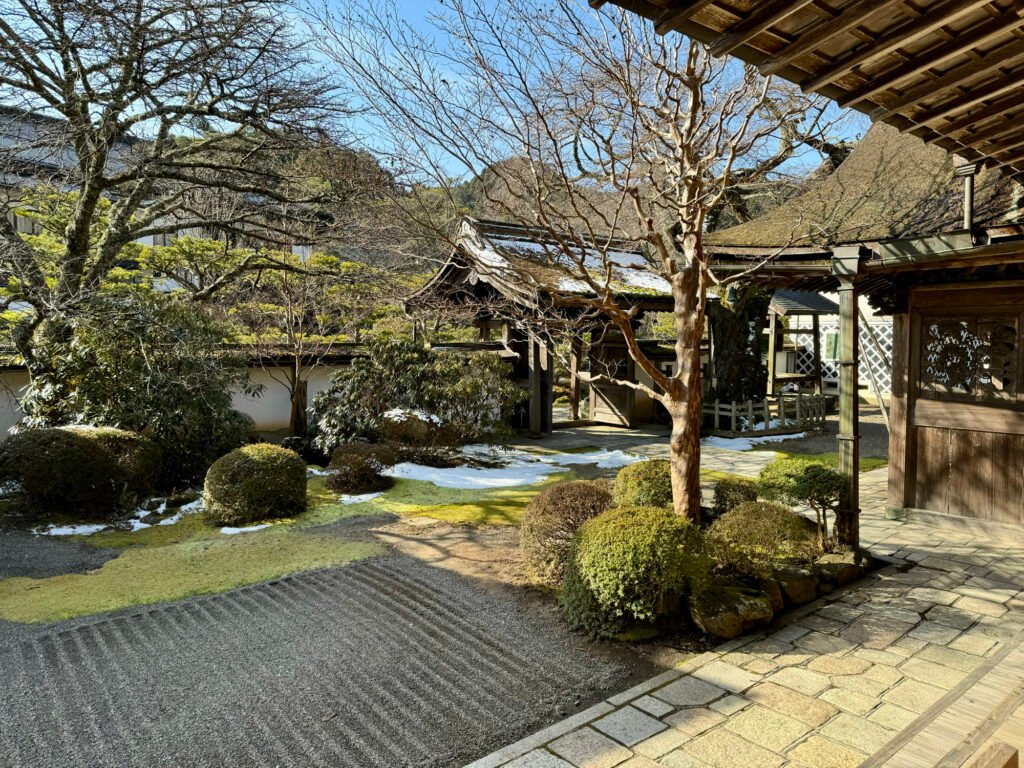
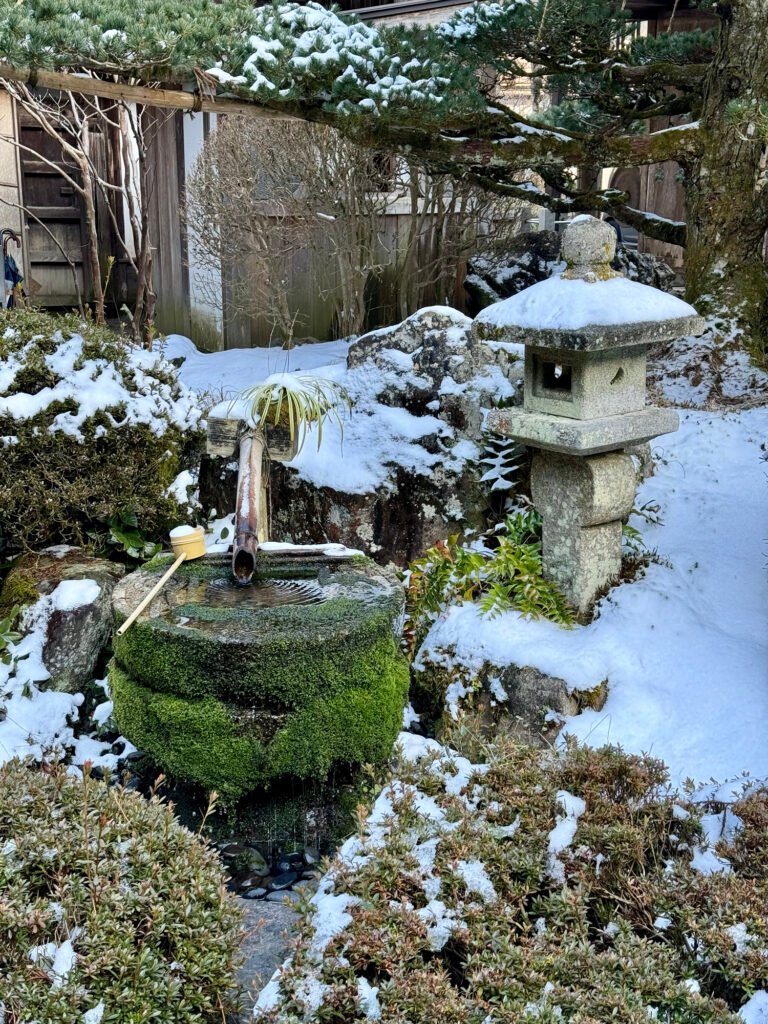
Koyasan had seen a dusting just before our arrival, and while much of it had melted by the time we checked in, Kongosanmai-in (金剛三昧院) – one of the first temples we visited that afternoon – was still draped in white. There was real snow on the ground between the stone lanterns, dusting the curved temple rooftops, and clinging to the lower branches of the giant, ancient cedars.
I could feel my own smile the moment I saw it. There is something about fresh snow on a thousand-year-old temple that makes the sacred feel suddenly, unexpectedly tangible – the ancient architecture outlined in white, as if someone had taken care to trace every intricate edge. It was a complete surprise, and it felt exactly right.
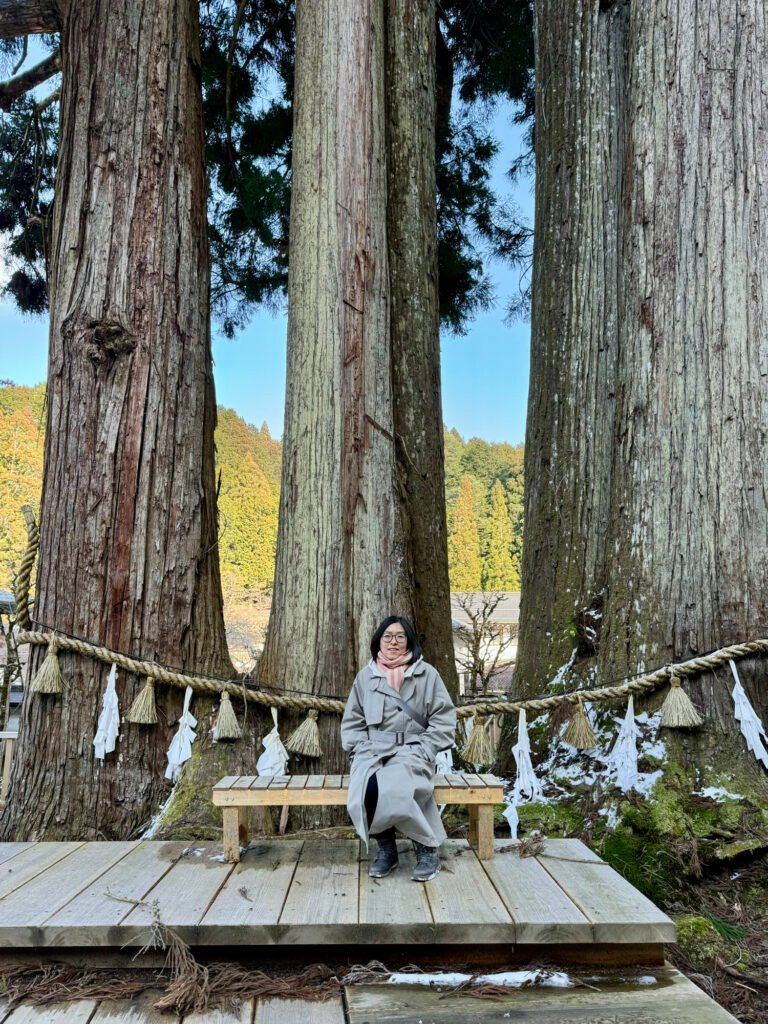
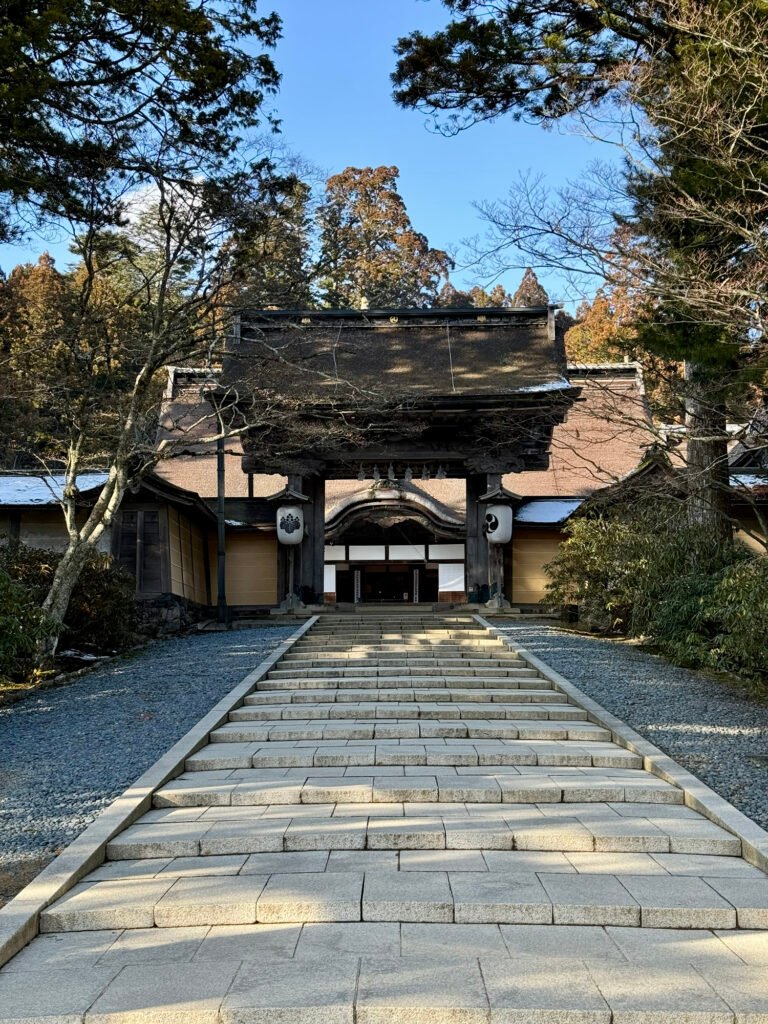
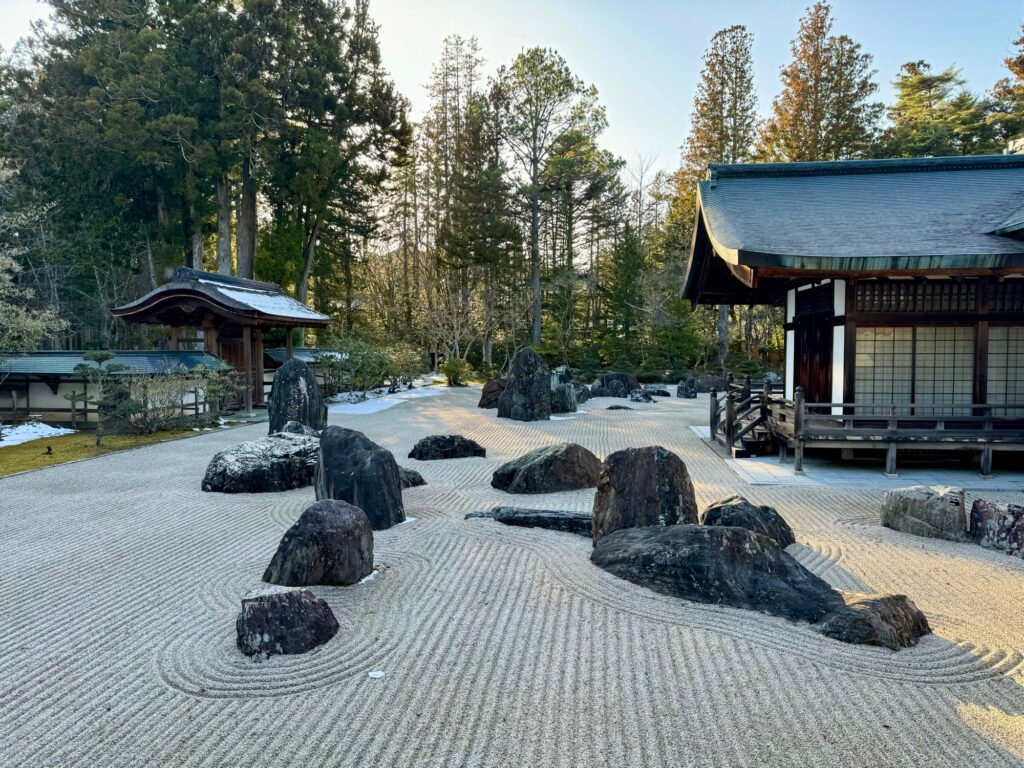
From there, we visited Kongobu-ji (金剛峯寺), the head temple of Shingon Buddhism. It is a sprawling, masterful complex, home to Japan’s largest rock garden and interior rooms lined with stunning painted sliding screens (fusuma-e). Photography is restricted inside, which forces you to actually look. We moved slowly and quietly through the halls, arriving back at our temple stay for dinner feeling already changed by the mountain air.
Our Home for the Night: Shojoshin-in
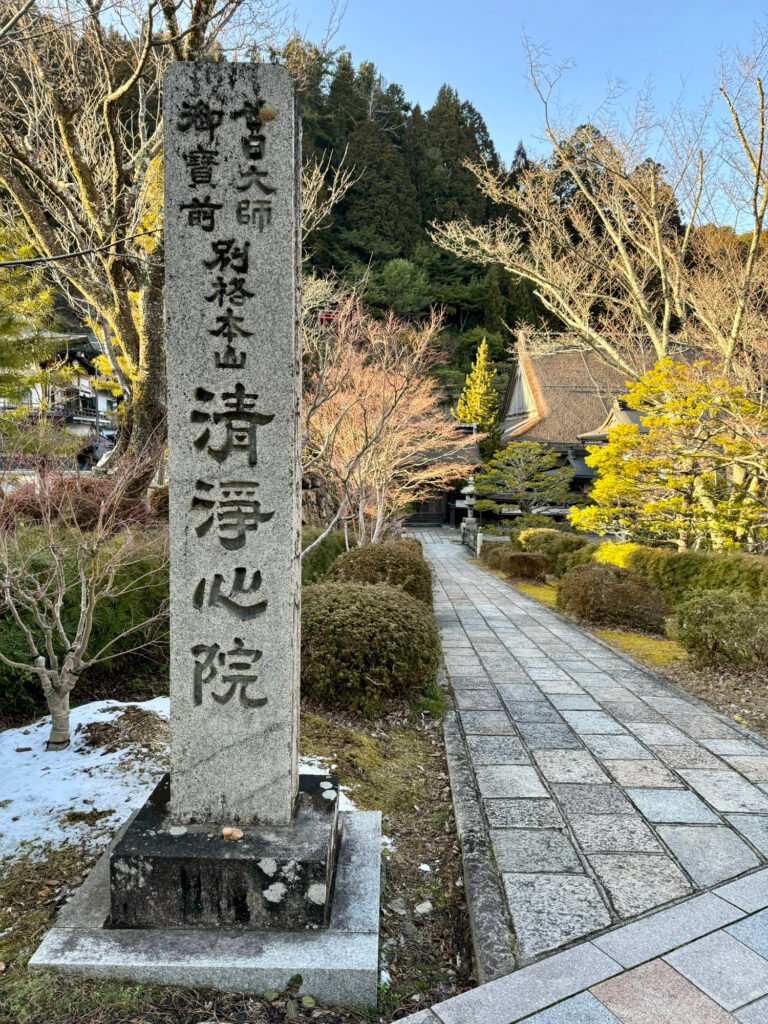
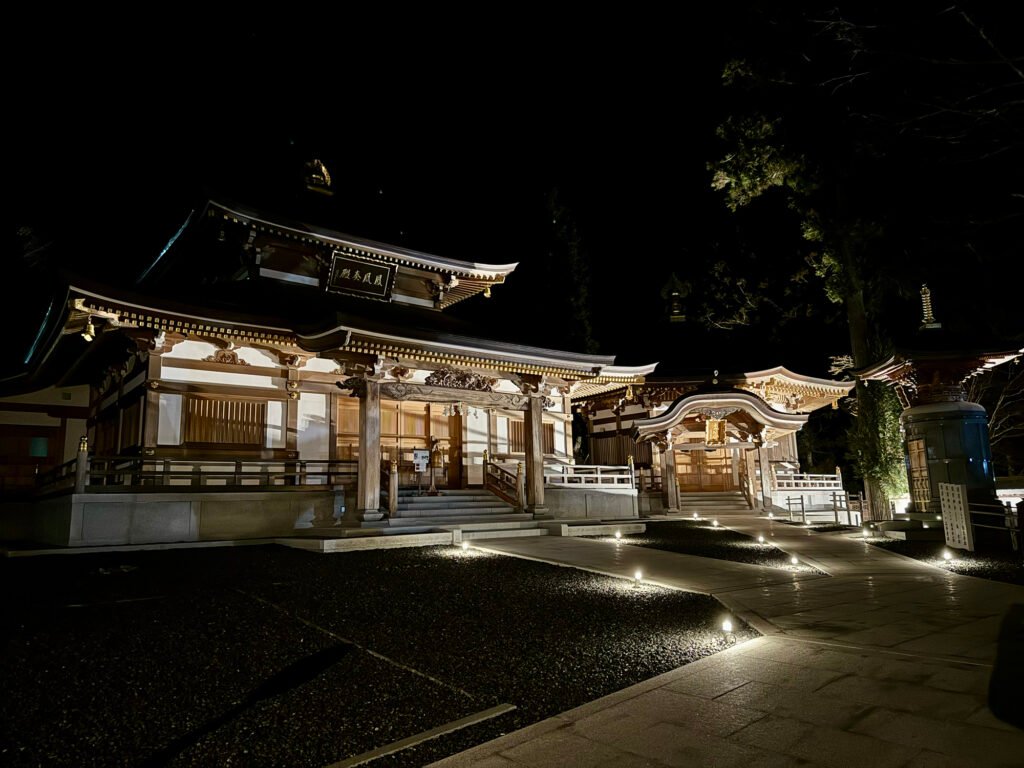
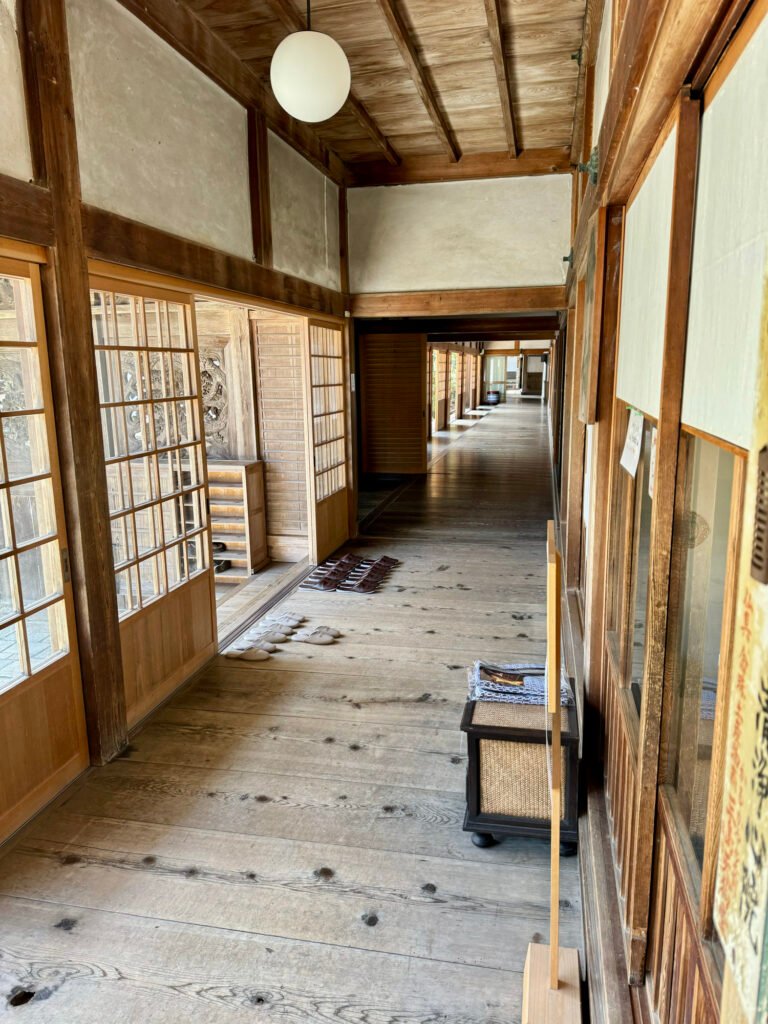
Shojoshin-in (清浄心院) sits at the spiritual heart of Koyasan, just a short walk from the entrance to the Okunoin cemetery. A monk greeted us at the heavy wooden gate and guided us through the creaking corridors to our tatami room.
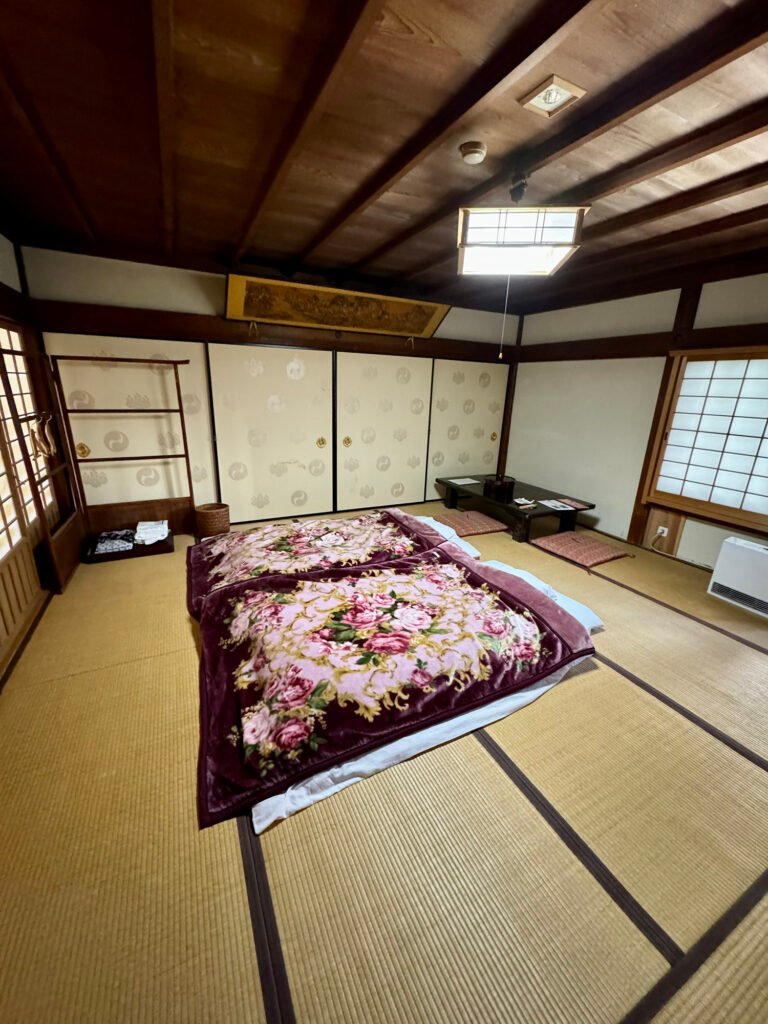
The space was a study in simplicity: woven straw mats, a low table, a portable space heater, and a rack holding the temple’s provided robes and towels. Aside from that, there was almost nothing else. We were handed a sheet outlining the evening’s rigid schedule and the temple’s house rules. We read it carefully, both of us feeling a flicker of anxiety; we were acutely aware that we were guests in a living place of worship, not a hotel, and we were determined to be respectful ones.
That simplicity, we soon understood, was entirely the point. The life of a Buddhist monk is not built around comfort. The room wasn’t sparse out of neglect – it was spare by design. It felt like an invitation to bring less of our outside lives with us so that we might notice more of what was right in front of us.
Shojin Ryori: Dinner in Silence
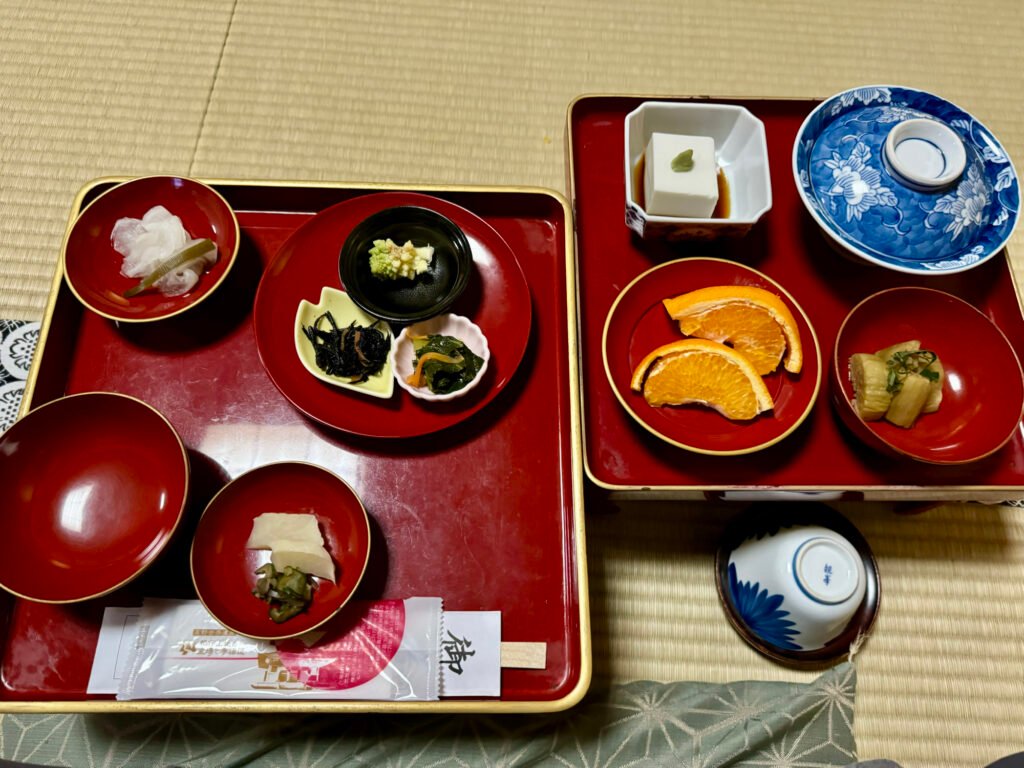
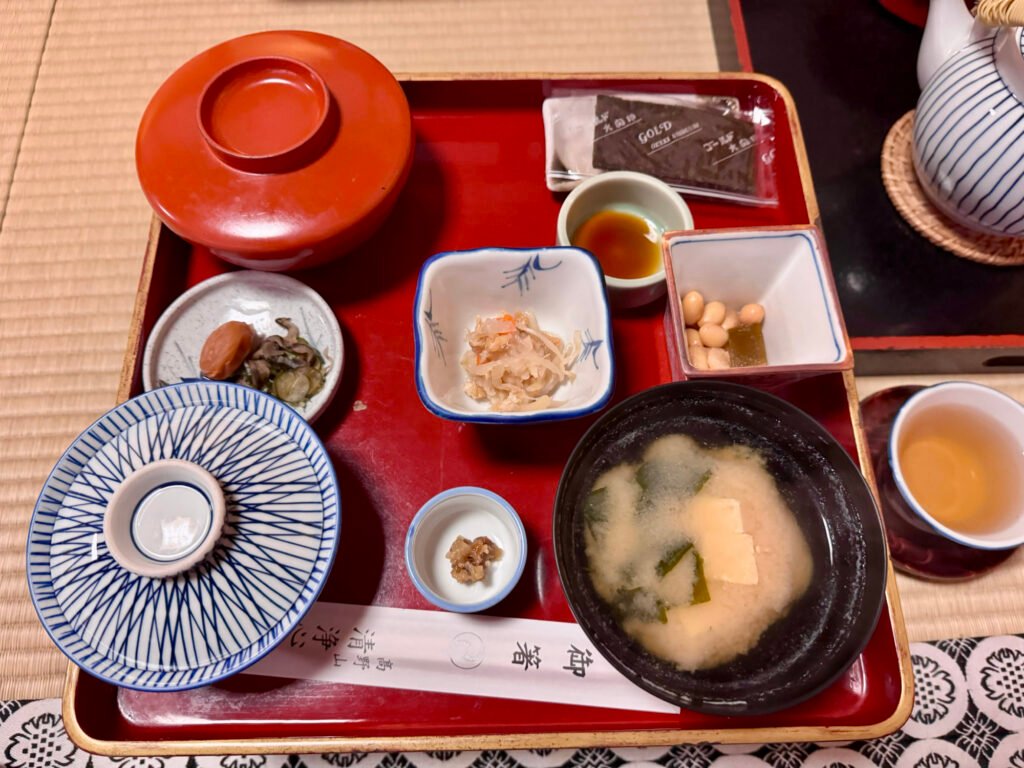
Shojin ryori (精進料理) is the traditional Buddhist vegetarian cuisine that has been refined in Japanese temples for over a millennium. It is based on the Buddhist principle of ahimsa (non-violence) and follows a strict “rule of five” – five colors and five flavors – and strictly forbids meat, fish, or pungent vegetables like onion and garlic. What remains is a culinary meditation on the potential of plant-based cooking when it has had centuries to evolve.
Dinner was served in a large communal hall. All the temple guests sat together on the tatami floor at individual low tables, with intricate lacquered trays arranged before us. Then, the silence set in. It wasn’t an awkward, heavy silence; it was an intentional one, the kind that asks you to pay attention to the steam rising from the soup and the texture of the grain.
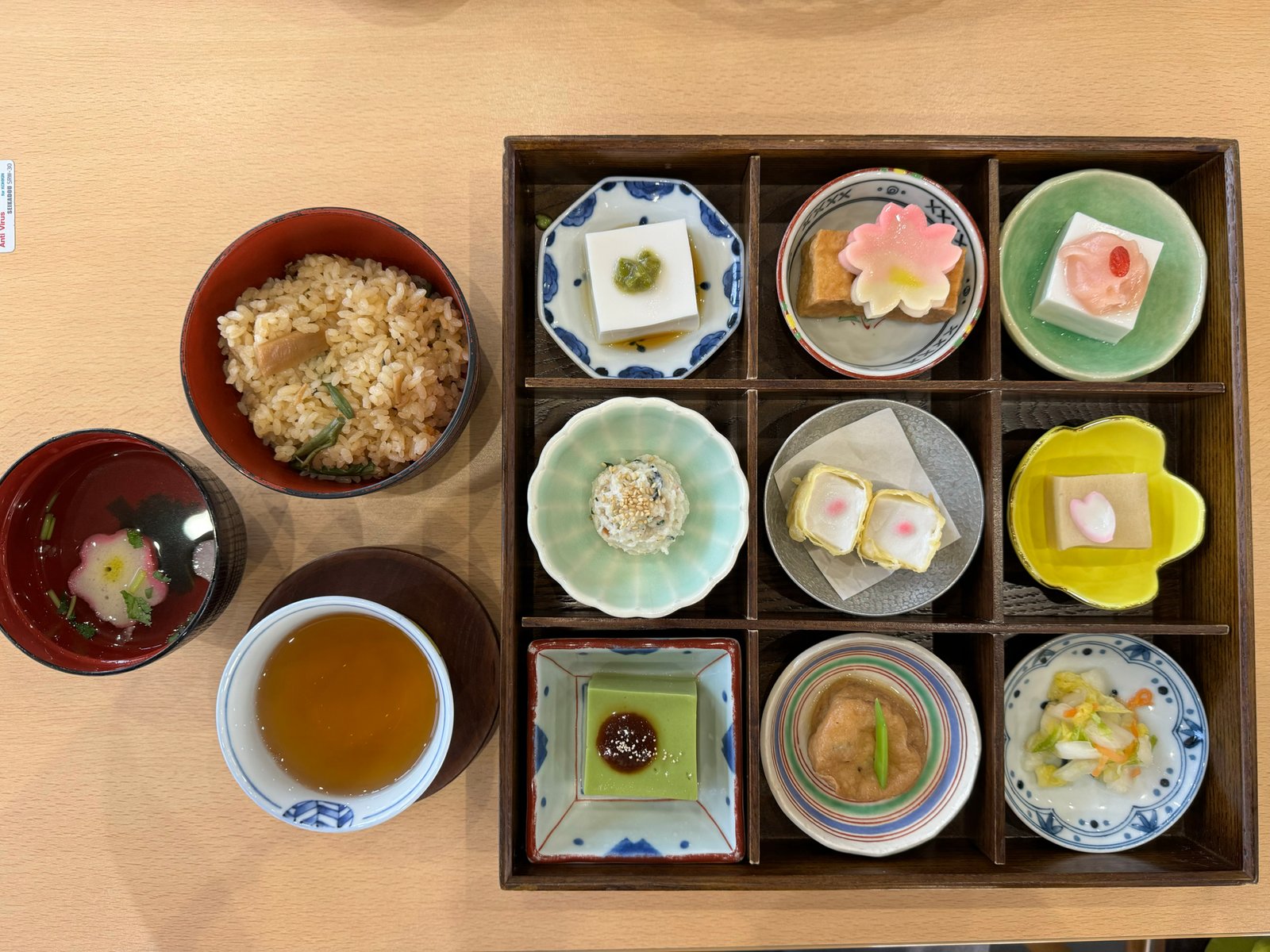
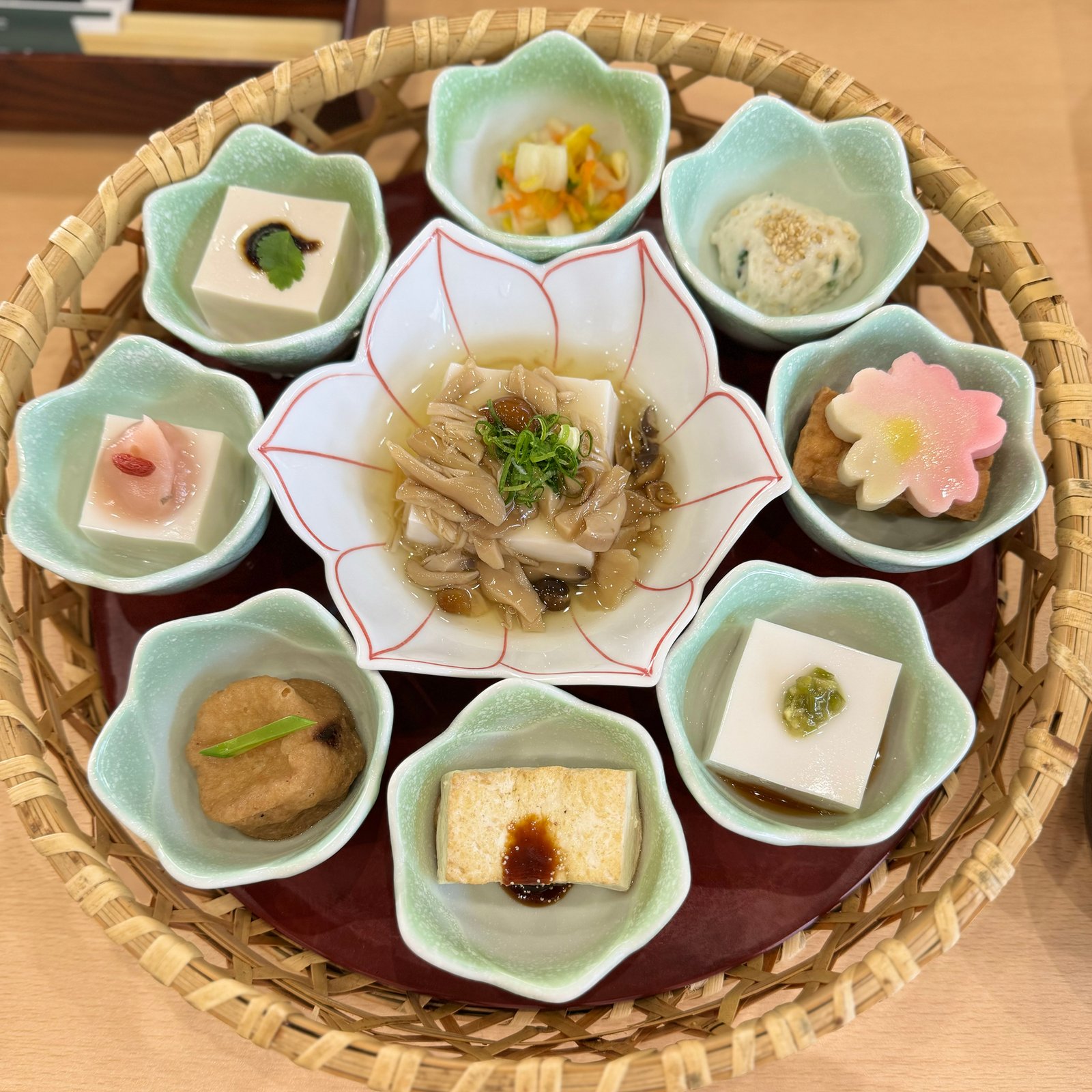
The standout was undoubtedly the goma dofu (sesame tofu). This isn’t the soy-based tofu you find in a typical grocery store; it is made from sesame paste and arrowroot starch. The texture is dense yet smooth, with a flavor that blooms slowly on the palate – deeply nutty, faintly floral, and unlike anything else I’ve tasted.
We were so taken by it that the next day, we sought out a local shop that specialized exclusively in goma dofu. While that standalone version was technically more refined, eating it for the first time in the quiet, chilly hall of the temple is an experience no restaurant can replicate. The temple meal wasn’t just food; it was a complete immersion.
Night Walk in Okunoin
This is the part we talk about most.
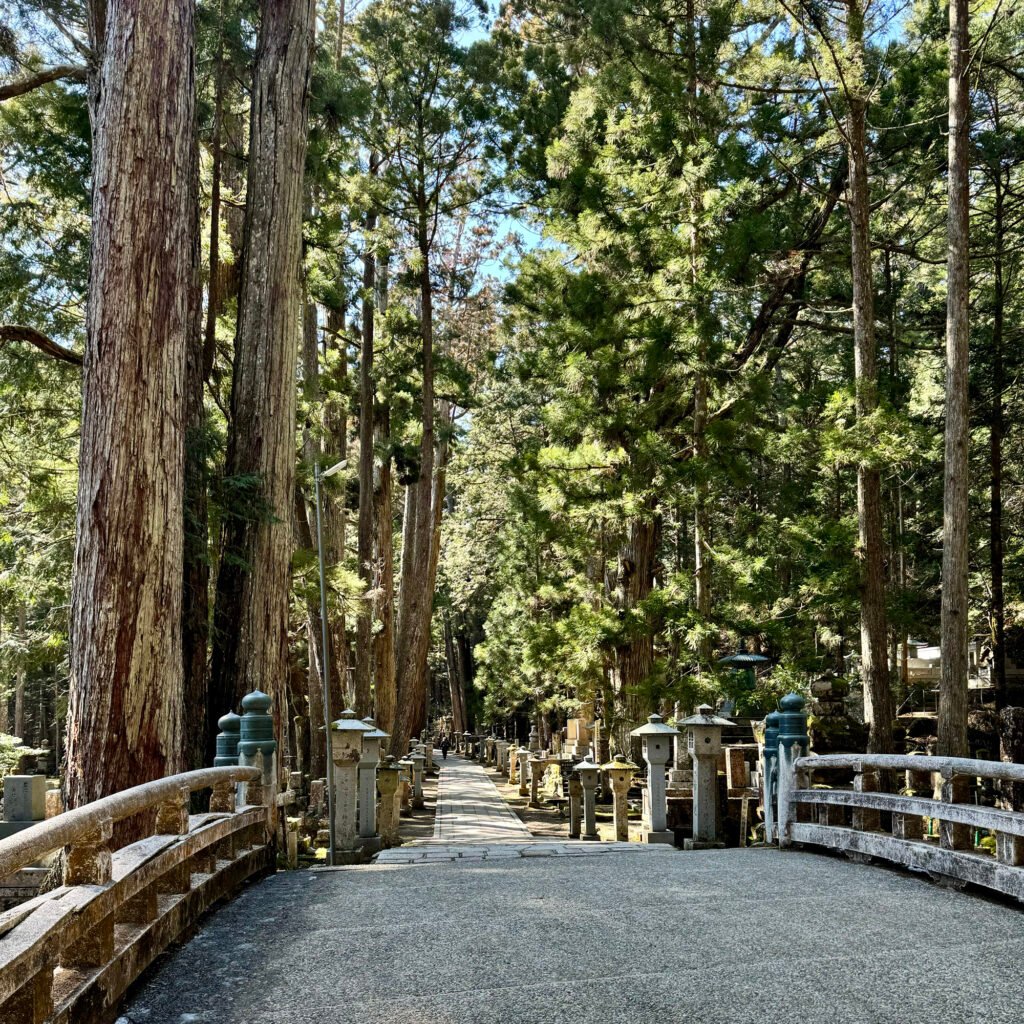
Okunoin (奥之院) is Japan’s largest cemetery, stretching nearly two kilometers along a stone-paved path through ancient cedar trees. Over 200,000 grave markers line the route – samurai lords, monks, feudal lords, and even corporate monuments from Japanese companies honoring their founders on sacred ground. At the far end lies the Torodo Hall (Hall of Lanterns), and just behind it, the mausoleum (the Gobyo) where Kobo Daishi, the 9th-century founder of Shingon Buddhism, remains in eternal meditation.
Our guided walk departed from Ekoin (恵光院), a nearby temple, and was led by a monk – not just a guide, but someone who wove Buddhist philosophy through the walk itself. We learned the names and histories of the figures buried along the path. We learned something about impermanence. We learned, quietly, to walk more slowly.
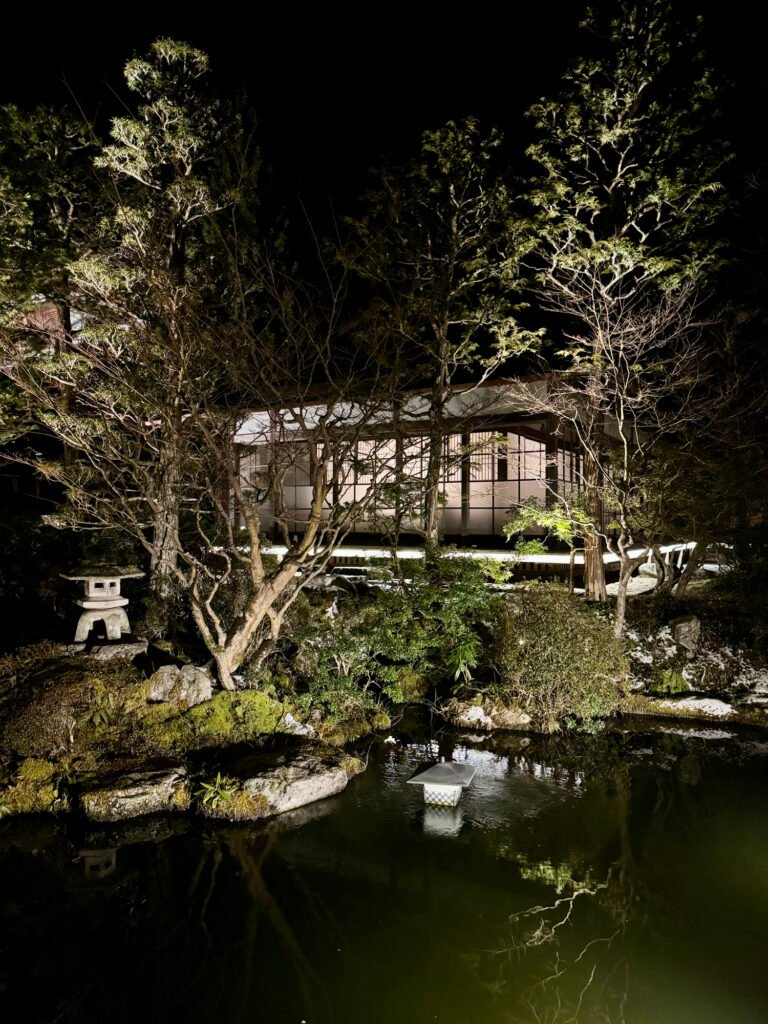
The path leading toward the heart of the cemetery was lit only by lanterns. Not floodlights – stone lanterns. The darkness between the ancient cedars was real darkness, and the grave markers on either side faded into it. We walked slowly because you find yourself walking slowly, without anyone needing to say so.
The Threshold of the Sacred
Just before the path ends, we reached a small cluster of buildings that felt like a final outpost of the living. Here, we stopped at the Mizukake Jizo, a row of bronze statues standing along the river’s edge. Following the monk’s lead, we took wooden ladles and poured water over the figures – an act of offering for the souls of the departed and a cleansing of our own intentions.
A few steps further lay the Gobyobashi Bridge, the threshold of the innermost sacred precinct. It drew a clear line: on this side, the ordinary world; on the other, something else. Before our first step onto the stones, we paused to bow toward the mausoleum, acknowledging that we were entering the living quarters of Kobo Daishi.
Once across, the final stretch was short (perhaps only fifty meters) but the atmosphere shifted instantly. The lanterns here felt more like flickers against the massive, ancient cedars. We moved in a deep, intentional silence, the grave markers on either side fading into the real darkness of the forest.
And then, the path opened up.
The Hall of Lanterns
Torodo Hall, the Hall of Lanterns, serves as the grand worship space directly in front of the mausoleum. Inside, more than 20,000 lanterns hang from the ceiling and walls, each one perpetually lit, casting the space in a warm amber glow. After the darkness of the path, the effect was staggering. We stopped. Neither of us spoke for a while.
Kobo Daishi is believed, within Shingon Buddhism, to be not dead but in a state of eternal meditation inside the Mausoleum structure just beyond this hall – waiting for Miroku Nyorai, the Future Buddha, and offering salvation to those who seek it. Monks bring him two meals each day in a ritual that has continued for centuries.
We stood near the wooden doors of the mausoleum entrance, which is as far as any visitor is allowed to go. We were not religious visitors. But standing there in the dark, surrounded by ten thousand lanterns and twelve hundred years of accumulated faith, we felt something. Awe. Gratitude. The particular smallness that comes from realizing you are a very small thing in a very long story.
We weren’t allowed to take any photographs on the tour. What we have instead is the memory: the monk’s voice in the dark, the smell of incense, the cedars closing in on either side, and then, suddenly, that amber light.
At the end of the walk, we turned back toward the entrance and bowed once more toward Okunoin before leaving. It felt necessary.
The Communal Bath: A Sprint through the Cold
The communal bath at Shojoshin-in was open only until 9:00 PM. Between our afternoon explorations, dinner at 5:30 PM, and the night walk at 7:00 PM, our window for a soak became a last-minute sprint right before closing. To be honest, we almost talked ourselves out of it entirely..
Our hesitation was genuine. It had been a long time since either of us had used a communal bath, and we were suddenly unsure of the unspoken customs – what to bring, where to store our things, and how to navigate the etiquette. We found ourselves doing frantic, on-the-spot research just to make sure we wouldn’t commit a temple faux pas. Then, there was the matter of the temperature. Koyasan in early March is biting, and our room was on the far side of the building from the bathhouse.
We eventually landed on a system: strip down in our warm room, wrap ourselves in the temple’s provided robes, and make a run for it.
The “system” worked reasonably well in one direction. However, on the way back – warm, clean, and feeling far more at peace – we returned to our room and were hit with a sudden realization of just how many layers we had shed in our haste. A messy mountain of thermal tops, sweaters, and socks sat in a heap on the tatami floor, a silent testament to how much we were overcompensating for the mountain chill. We stood there laughing at the sheer volume of laundry for a while.
The bath itself had been warm, still, and worth every awkward, freezing, logistically complicated second.
A Quick Guide to Temple Bath Etiquette
If you’re a first-timer, the process is simple but specific:
- Prep: Undress in the small changing area and place your clothes in one of the provided baskets.
- Wash: You must wash your entire body before entering the tub. Sit on the small stool at a faucet station and use the handheld showerhead.
- Soak: Once you are completely rinsed of soap, step into the communal tub. Keep your small privacy towel out of the water (most people rest it on their head). The water is meant for soaking only, so no splashing or swimming!
Day Two: Departure
Morning Sutras at Dawn
I had not planned to go.
The morning ceremony began at 6:30 am. Unlike my partner, I am not a morning person. The tatami floor, for all its cultural appeal, is harder than it sounds, and the idea of getting up before dawn was not appealing. My partner convinced me. The cold helped – it was too cold to sleep comfortably anyway, and lying awake alone in the room until breakfast felt worse than getting up.
I was glad I went.
The ceremony took place in a hall full of monks, the guests seated quietly at the very back. For one full hour, the monks chanted sutras – rhythmic, resonant, ancient in a way that the word “ancient” barely covers. We understood nothing. We didn’t need to. The experience of sitting still in a cold temple hall before dawn while sound that old move through the air around you is complete on its own terms.
We walked back to our room for breakfast, feeling – the only word for it – clean. Like something had been gently rinsed. The morning tasted different after that.
It’s worth mentioning: we are not religious. But we’d been drawn to certain Buddhist philosophies long before this trip – ideas about impermanence, about attention, about the relationship between suffering and attachment. Koyasan didn’t convert us to anything. But it resonated in the way that something does when you encounter it in its fullest form.
Temples, Treasure, and Goma Dofu
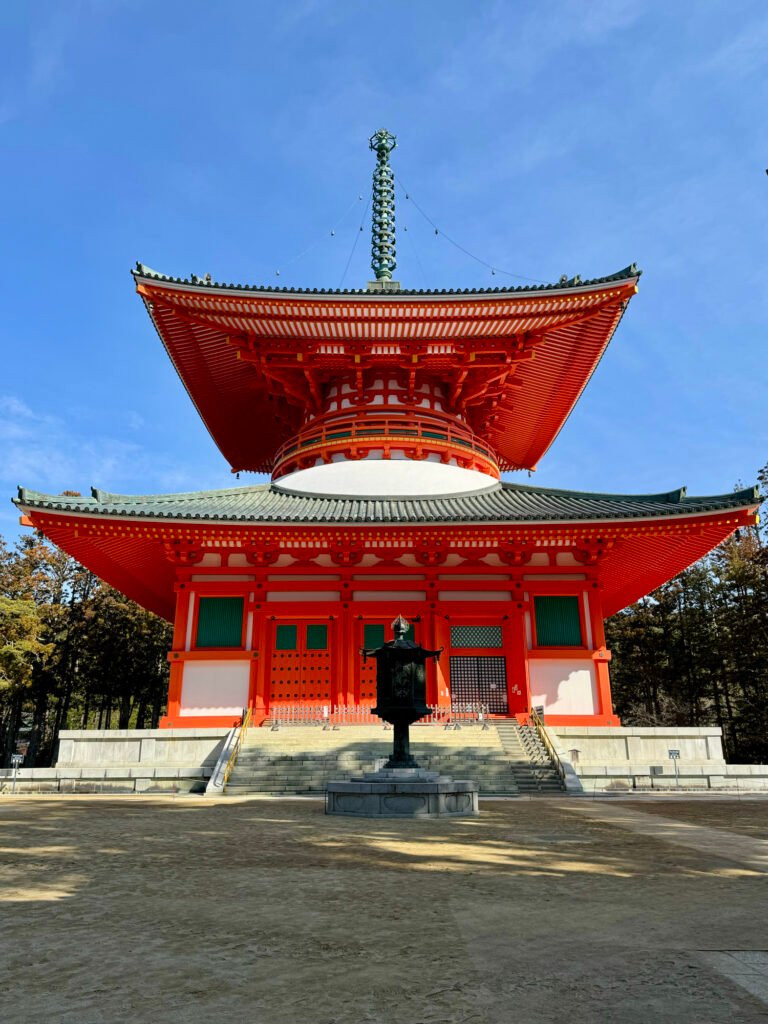
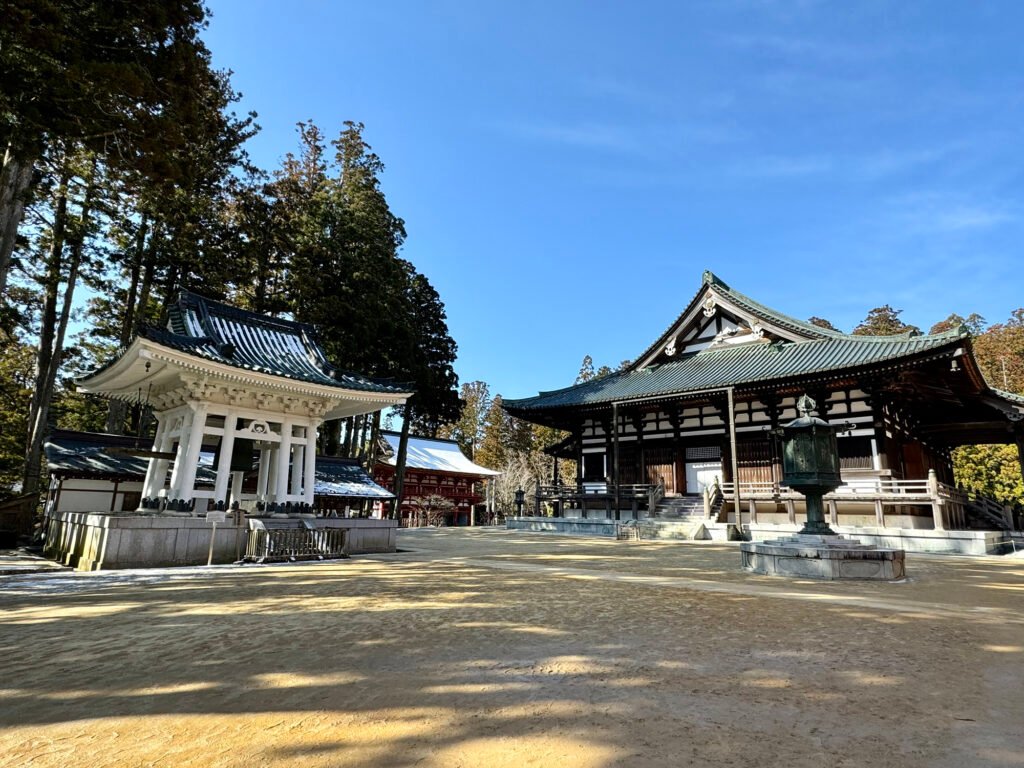
After breakfast and checkout, we stored our luggage at Shojoshin-in and spent the morning exploring. Our first stop was Danjogaran (壇上伽藍), the sacred temple complex at the heart of Koyasan. It is a sweeping collection of wooden halls and ritual spaces that serves as the architectural core of the entire mountain.
From there, we walked to Daimon Gate (大門), the grand two-story entrance to Koyasan. It’s flanked by two enormous, fierce-looking Nio (guardian statues) that have stood watch over the mountain’s western approach for centuries.
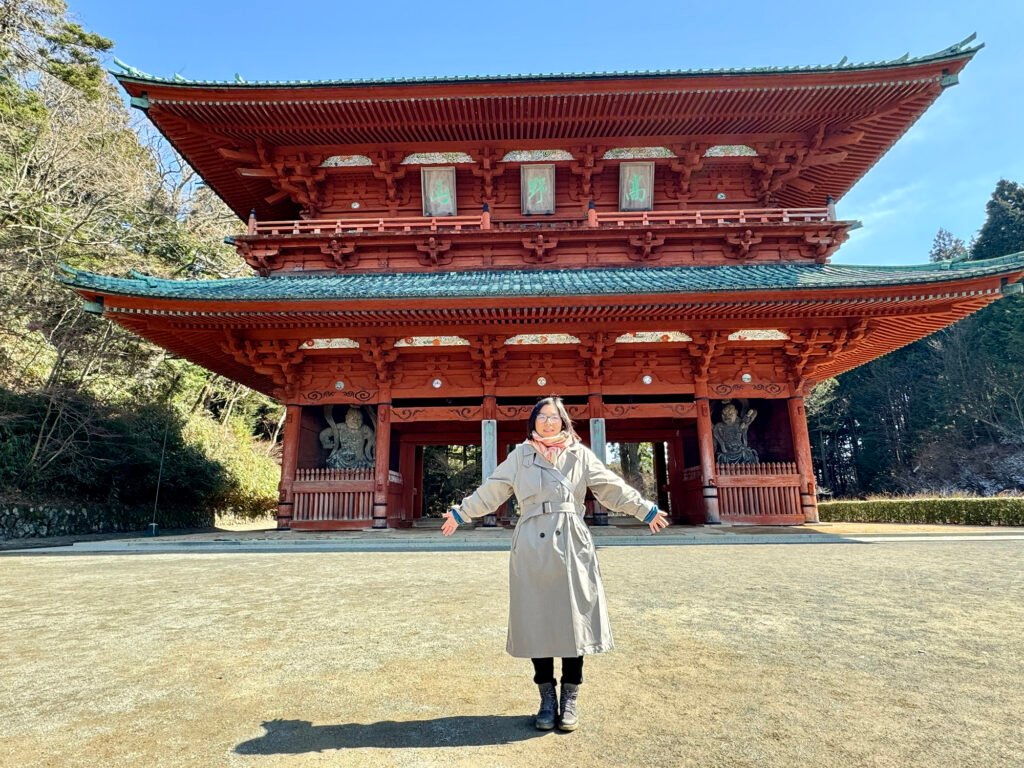
Then, Koyasan Reihokan (霊宝館), the temple treasure museum. It houses an extraordinary collection of Buddhist art – mandalas, sculptures, ritual objects – spanning over a thousand years of Shingon practice. If you want to understand the depth of what surrounds you on the mountain, this is where you start.
Lunch was at Gomadofu Sōhonpo (ごまとうふ総本舗), a specialist in Koyasan’s most famous delicacy. We ordered the goma dofu, which arrived beautifully plated – a small, pale square of art on a ceramic dish. Made from sesame and arrowroot rather than soy, it was creamy, nutty, and confirmed everything we’d suspected: food this carefully prepared belongs in a category of its own.
The Goma Fire Ritual
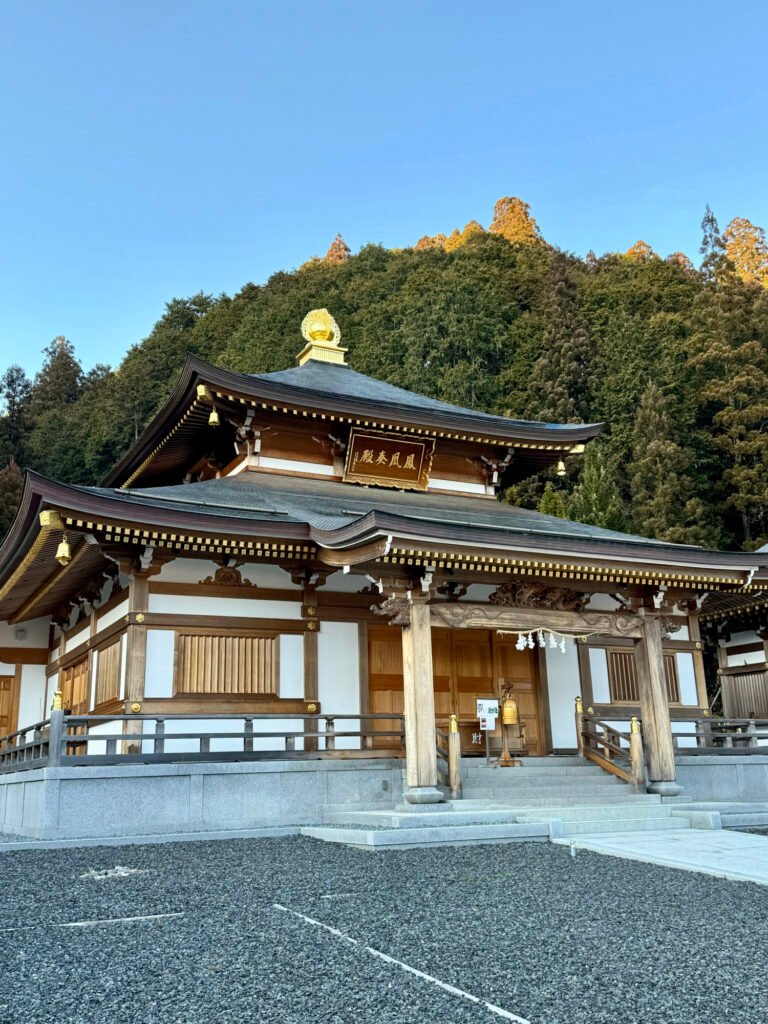
We returned to Shojoshin-in for the Goma fire ritual. While many temples hold these ceremonies at dawn, ours was scheduled for the early afternoon – a final, visceral experience before leaving the mountain. The ceremony at Shojoshin-in is particularly famous because it is held in a dedicated Koma-do (Fire Hall), a space with a deep, ancient atmosphere that makes the intensity of the flames feel even more concentrated.
We gathered in the hall as a monk began the invocation, striking a steady, hypnotic rhythm on a taiko drum that seemed to vibrate in our chests. He began feeding small wooden prayer sticks, called gomaki, into a consecrated fire. As the flames climbed higher, fueled by the wood and the monk’s rhythmic chanting, the heat became a physical presence in the room.
Toward the end, we were invited to participate. We each took a gomaki, wrote our names and a personal wish on the wood, and watched as they were cast into the fire. It is a small gesture, but there is something deeply clarifying about writing a intention down and then watching it literally transform into smoke and flame. It felt less like a petition and more like a release – trusting the fire to carry those thoughts somewhere else.
Okunoin, Again. In Daylight
Before catching our bus, we made a last-minute decision to go back to Okunoin. In daylight. We didn’t know when we’d get the chance to return, and it didn’t feel right to leave without seeing the forest once more – even though it meant we might miss our bus and, consequently, the last train to Kyoto.
We knew we didn’t have time to walk the full two kilometers to Torodo Hall; in the end, we only made it to the second bridge before turning back. But those twenty minutes were something entirely their own. The giant cedars that had loomed in the lantern-lit dark were now sharp and green against a brilliant blue sky. The grave markers we’d only half-seen the night before revealed names, textures, and centuries of moss.
The path, which had felt so otherworldly in the dark, was just as beautiful in the light – simply a different kind of beauty. We walked it reflecting on the stories the monk had shared the night before, layering daylight understanding over the night’s mystery.
Two different walks. Two different Okunoins. Both worth taking.
We did, in the end, make that last train to Kyoto – carrying the smell of cedar and incense with us back into the bright, modern world.
Practical Information
Our Honest Take on Duration
If we were planning this trip again, we would stay two nights instead of one. While a single night covers the essentials – the dinner, the night walk, and the morning ceremony – it can feel like a mad dash. Between the two-hour journey from Osaka and the specific schedule of the monks, one night left us constantly checking our watches. Koyasan rewards slowness; a second night would give you the room to breathe and explore the quieter corners of the mountain without rushing to catch the last train.
Getting There
Koyasan sits at an elevation of about 800 meters in the mountains of Wakayama Prefecture, roughly two hours south of Osaka. The journey itself is an essential part of the experience, a series of transitions that slowly strip away the noise of the city.
- From Osaka (Namba or Shin-Imamiya Station): Take the Nankai Koya Line toward Gokurakubashi. The “Limited Express Koya” takes about 90 minutes and offers a more comfortable, scenic ride.
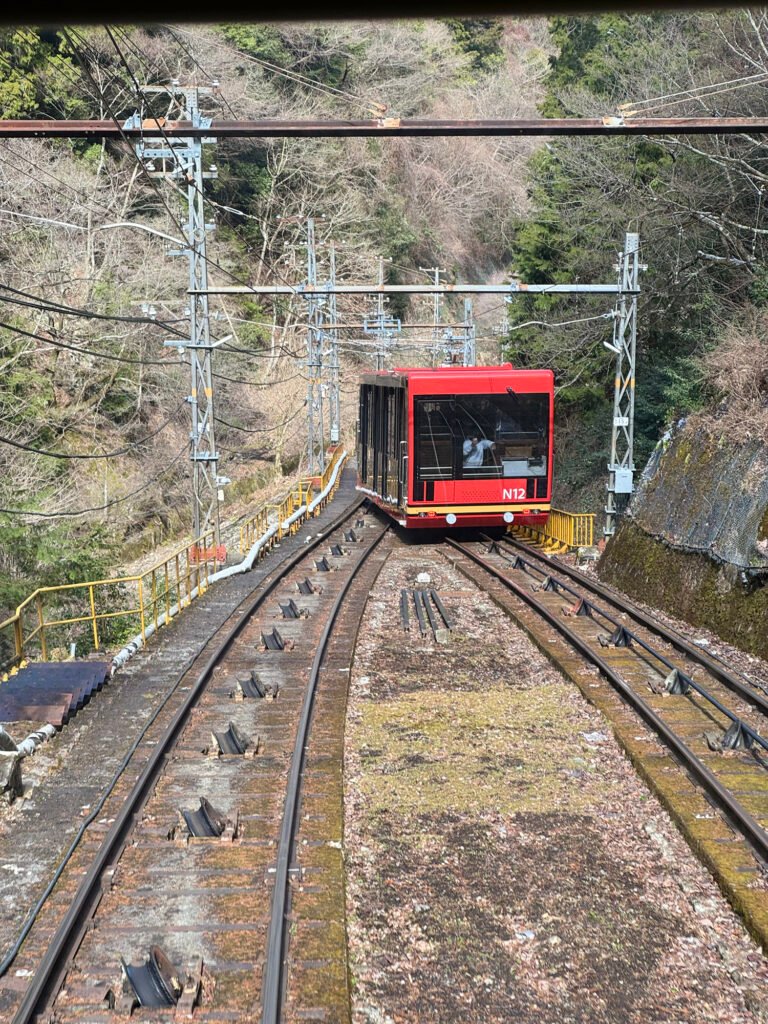
- The Ascent: At Gokurakubashi, you transfer to the Koyasan Cable Car. In just five minutes, it climbs steeply through dense cedar forest, the air cooling and thinning as you rise.
- The Final Mile: From the cable car station at the top, a local bus carries you into the heart of the village.
By the time the cable car crests the ridge and the forest opens up around you, you already feel like you’ve arrived somewhere that operates on a different kind of time.
Pro-Tip: While IC cards (Suica/Pasmo/ICOCA) now work for the entire journey, including the cable car and buses, the Koyasan World Heritage Digital Ticket (~¥4,000 in 2026) is usually a better deal. It covers your round-trip from Osaka and offers unlimited bus travel on the mountain, plus small discounts at the Reihokan and major temples.
Booking Shukubo (Temple Lodging)
- Reservations: We booked through Booking.com, but you can also find listings on Rakuten Travel or Agoda. For the full official listing and direct booking, you can request a stay through the Koyasan Shukubo Association.
- Book Ahead: Availability can be limited, especially in spring and autumn, so book as far ahead as possible.
A General Temple Schedule
While every shukubo on the mountain operates slightly differently, most follow a similar, age-old rhythm. This schedule is built around the monks’ daily rituals of meditation and prayer.
Our Experience at Shojoshin-in:
| Time | Activity |
|---|---|
| 2:00pm | Check-in |
| Afternoon | Explore nearby sites like Kongosanmaiin and Kongobuji |
| 4:00–9:00pm | Communal bath |
| 5:30pm | Shojin ryori dinner |
| 7:00pm | Night walk in Okunoin (book separately) |
| 6:30am | Morning sutra ceremony |
| 7:30am | Shojin ryori breakfast |
| 10:00am | Check-out (luggage storage available) |
| Morning | Explore nearby sites like Danjogaran, Daimon Gate, and Reihokan |
| 1:00pm | Goma fire ritual |
Note: Each temple will have its own specific timing – some may hold their fire ritual at dawn, while others, like Shojoshin-in, may hold it in the afternoon. Always check your specific temple’s welcome board upon arrival.
What to Bring
- Warm layers: Koyasan is often 5–10°C colder than Osaka or Kyoto, especially at night. If you are visiting in winter or early spring, bring thermal base layers and thick socks for walking on the cold temple floors.
- Comfortable Shoes: You will be walking a lot – the path through Okunoin alone is two kilometers of uneven stone paving. Make sure your shoes are broken in and have good grip.
- Cash is King: While you can pay for your shukubo online, Koyasan remains a traditional village. Many small shops, local buses, and the entrance fees for the smaller temples are strictly cash-only.
- The “Bath” Mindset: Most temple stays have communal baths rather than private en-suites. It can feel intimidating at first, but it is a deeply restorative part of the experience. A quick search on “Sento etiquette” before you arrive will save you any anxiety (e.g., remember to wash thoroughly before entering the soaking tub).
The Night Walk (Specifics)
- Booking: The English-guided tour is operated by Ekoin but is open to everyone. You must book this in advance on their website (usually around ¥2,500–¥3,000). Book in advance as spots fill up.
- Photography: Strictly prohibited once you cross the Gobyobashi Bridge.
- Duration: Expect to be on your feet for about 1.5 to 2 hours.
Final Thoughts
We arrived at Koyasan as curious visitors – not pilgrims, not converts, just two people who had heard something interesting from a friend and had one spot of availability left. We left the next afternoon with something harder to name.
Part of it was the sheer sensory experience: the silence of the shojin ryori dinner, the steam of the bath, the amber light of Torodo Hall appearing at the end of a dark path. But part of it was quieter – a feeling that the questions we’d been carrying were gently heard, even if they weren’t answered.
The temple stay isn’t a luxury experience. The floors are hard, the schedule is not your own, and the hallways in March are brutally cold. But there is a reason people have been making this journey for over a thousand years. Something about the mountain insists on slowing you down. And when you finally do, you start to notice things you’d been moving too fast to see.
If you’re building a Japan itinerary and wondering whether to make room for Koyasan – make the room. Stay two nights if you can. Go to the morning ceremony even if you’re not a morning person. And absolutely, go at night.
Have you done a temple stay in Japan, or is Koyasan on your list? We’d love to hear in the comments.
The End. Happy Travelling!


Leave a Reply