
Seeing the sakura in Japan has long been a bucket-list dream. However, between the fickle timing of the bloom – notoriously difficult to predict for international visitors who must book flights months in advance – and the skyrocketing prices and swarming crowds of peak season, we could never quite justify the trip. We began to wonder: is there a better way?
Our early March visit to Tokyo provided the answer. There, we met the cherry blossoms – just not the ones you’re thinking of. We missed the sea of pale Somei Yoshino that draws millions to Ueno Park in late March. Arrived instead during that “in-between” window, what we found were the Kawazu-zakura: a deeper, more vivid pink that clusters low on the branches and lingers for weeks rather than days.
Beyond the blossoms, we discovered a city of quiet pockets. We found neighborhood shrines tucked between convenience stores, a museum garden that felt like ours alone on a cloudy afternoon, and residential streets that moved at a pace entirely removed from the tourist corridors. If you’re visiting Japan in early spring and wondering if it’s “worth it” for the flowers: it is. You just have to know that you’re chasing a different kind of bloom, in a different kind of place.
Table of Contents
- Early Sakura in Tokyo
- Quiet Corners of the City
- Where to Eat
- Practical Tips for Early Spring
- Final Thoughts
Early Sakura in Tokyo
A Note on Kawazu-Zakura
Kawazu-zakura (河津桜) is an early-blooming variety that awakens anywhere from early February to early March, weeks before the Somei Yoshino that most people envision. The petals are a deeper, richer pink – almost fuchsia in certain light – and the trees are often found tucked into neighborhood shrines or lining quiet riverbanks rather than dominating grand national parks.
Because they bloom while the air is still crisp, they are less celebrated by the masses and far less crowded. For those of us who love the blossoms but dread the shoulder-to-shoulder crush of peak season, they offer a serene, vibrant alternative.
The Beauty of a Grey Sky
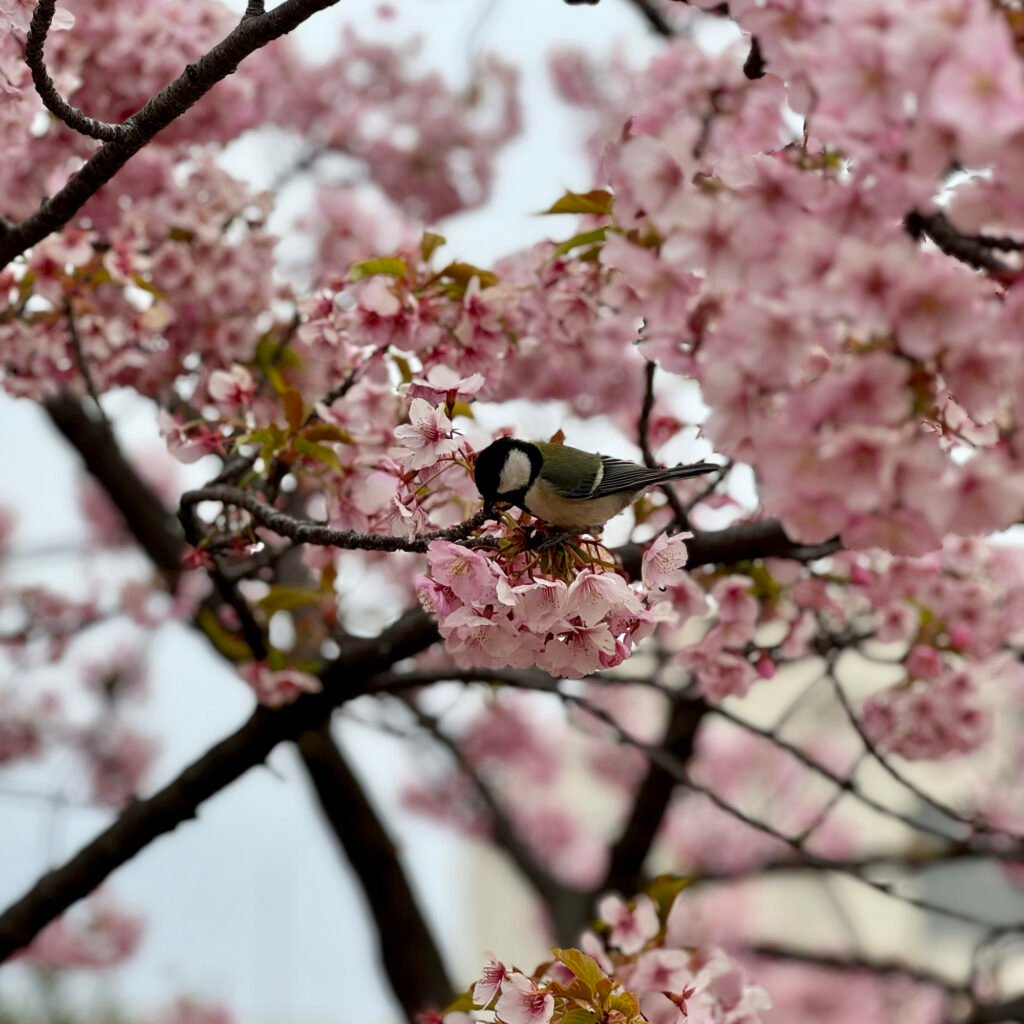
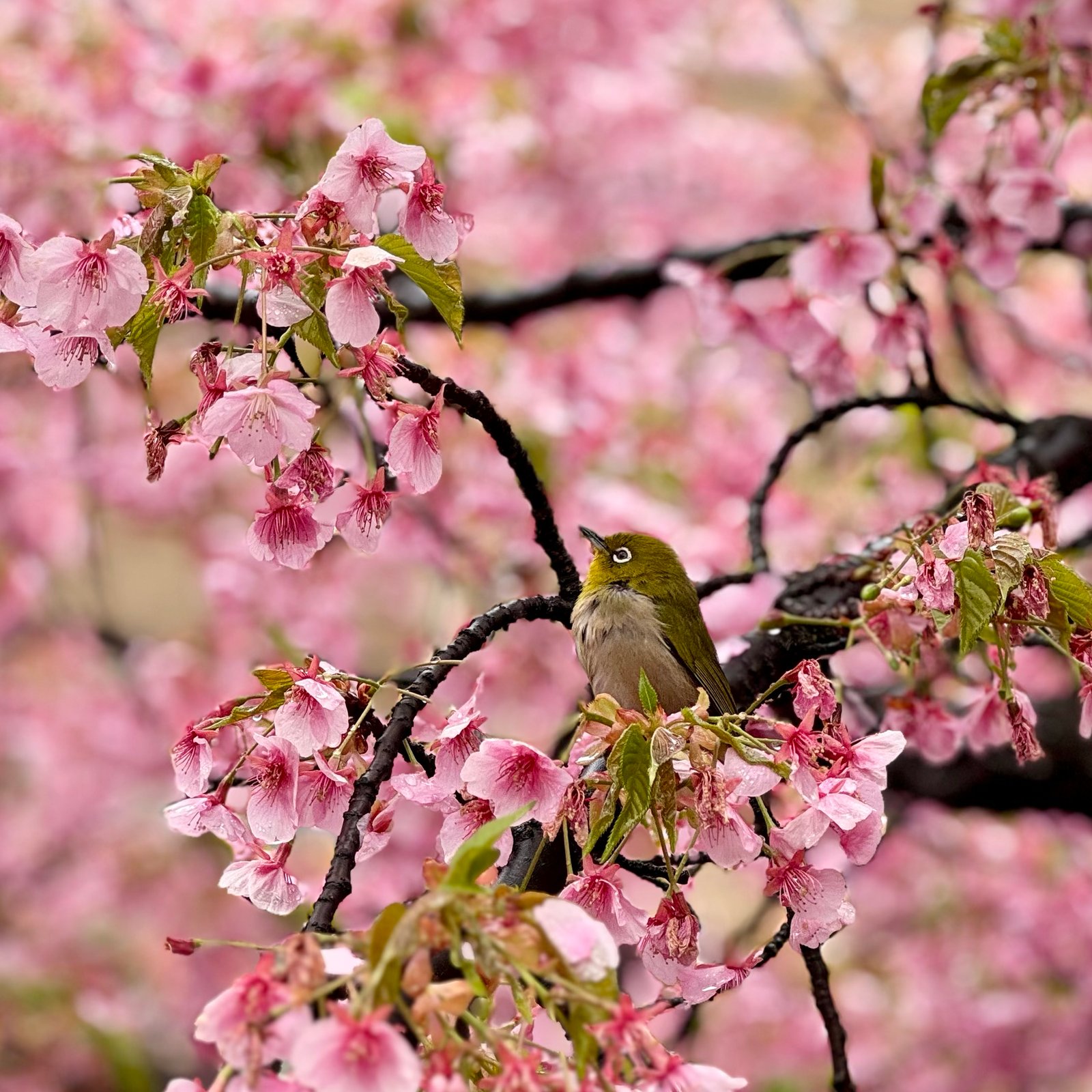
The early bloom attracts early birds, literally; you’ll often find the trees buzzing with Mejiro (vibrant green Japanese White-eyes) darting between the pink clusters.
It also rained almost every day during our early March stay. We had braced ourselves for disappointment, fearing the weather would dampen the experience. We were wrong. Rain on early spring blossoms possesses its own quiet magic. The petals appear more vivid against a moody, charcoal sky, the streets fall silent, and the entire city feels more intimate, as if Tokyo is sharing a secret with you before the rest of the world arrives.
Kuramae Shrine: The Golden Contrast
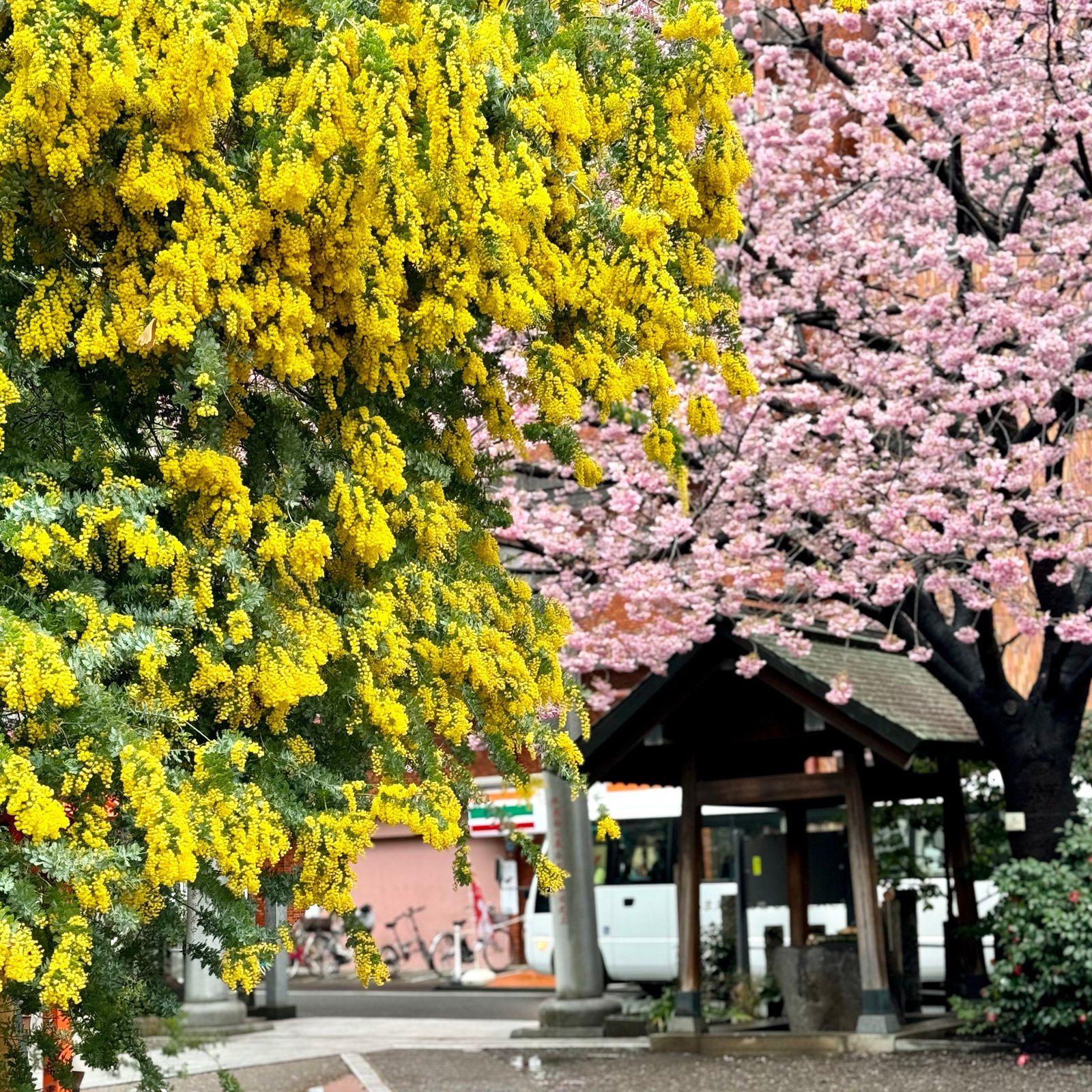
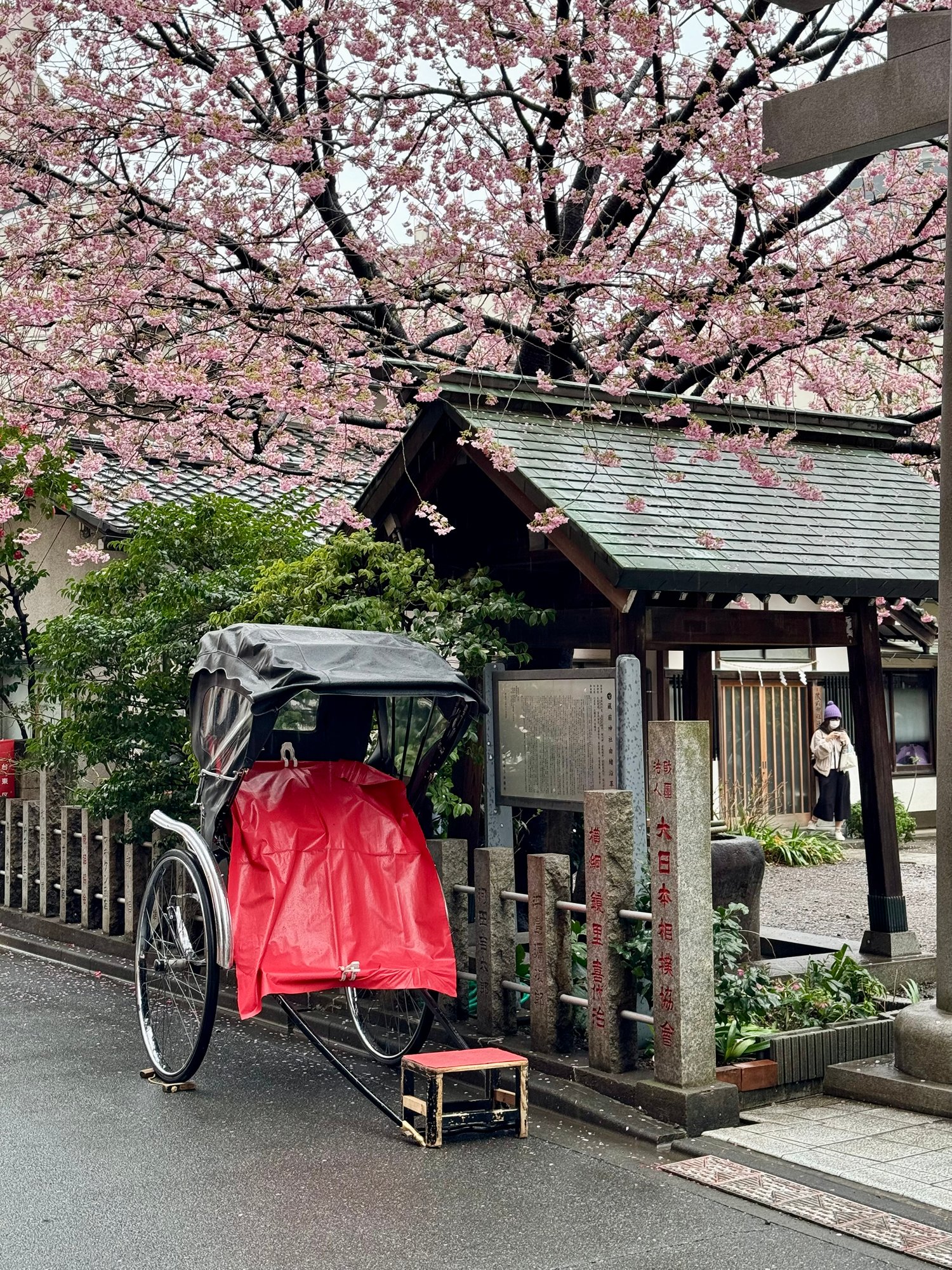
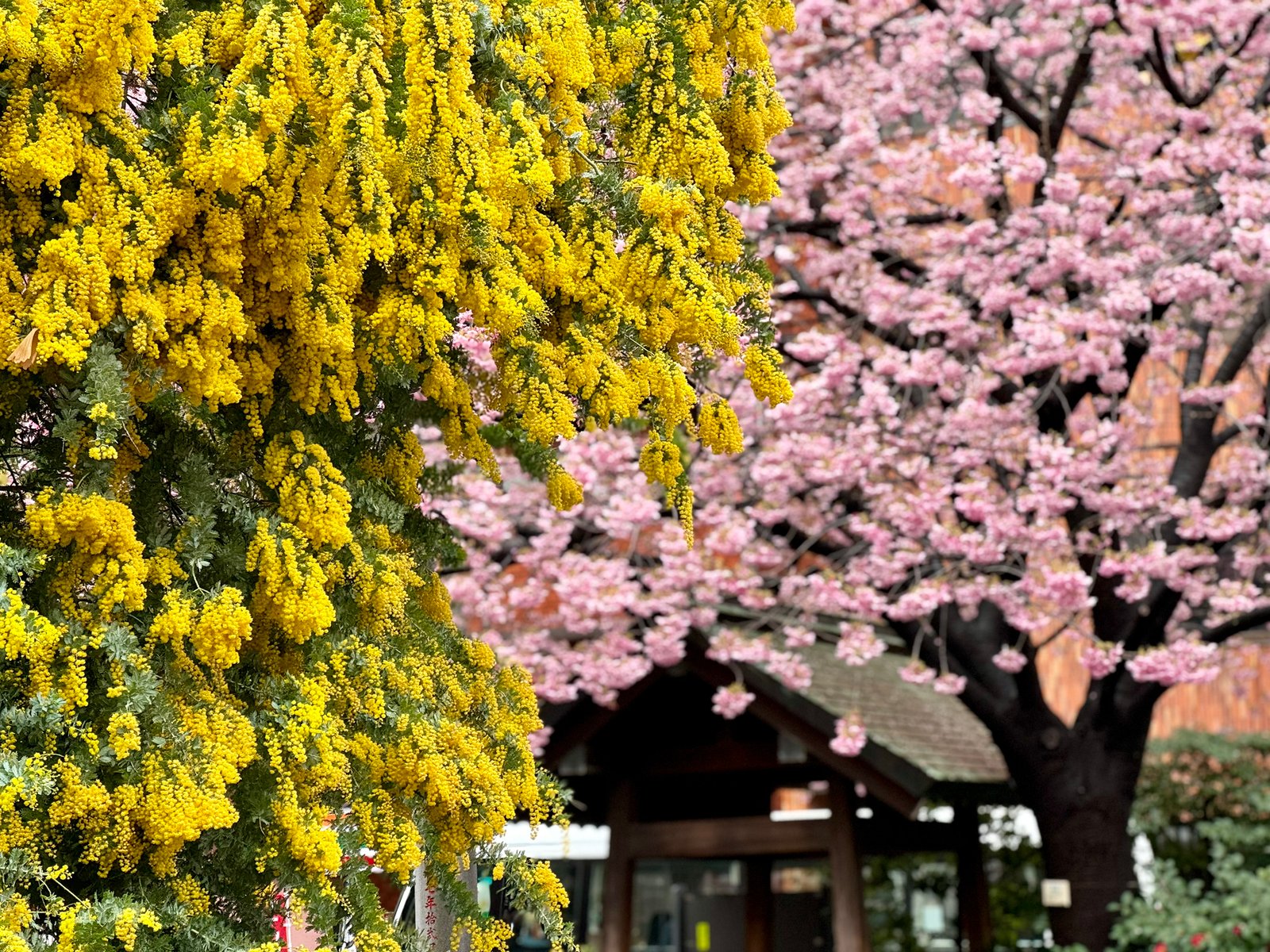
Kuramae Shrine (蔵前神社) is a modest Shinto sanctuary in the Asakusa neighborhood dedicated to the kami of Inari (commerce and prosperity). While the grounds are compact, early spring transforms them into a masterpiece of color. Here, the pink kawazu-zakura and golden mimosa bloom in a rare, simultaneous explosion of color against the weathered wood of the shrine. It has become one of the most photographed early-bloom spots in Tokyo, yet it manages to retain an unhurried, neighborhood soul.
Getting there: Kuramae Shrine is easily accessible via the Toei Asakusa Line or the Toei Oedo Line. Head to Kuramae Station; from the Asakusa Line exit (A3), it’s a simple 2-minute walk, while the Oedo Line exit (A6) leaves you with about a 5-minute stroll through the neighborhood’s trendy backstreets. If you’re coming from the heart of Asakusa (near Senso-ji), it’s a pleasant 15-minute walk south – perfect for escaping the main tourist thrum and stumbling upon the area’s famous craft coffee shops along the way.
We had been walking toward the shrine when the drizzle turned into something more purposeful. Realizing we were umbrella-less, we ducked into a nearby 7-Eleven store. We emerged with two plastic umbrellas and, on impulse, a couple of hot teas and onigiri.
Then we stood under the 7-Eleven awning – the undignified, wonderfully normal version of Tokyo tourism – and looked across the street.
The view was mesmerizing. The deep pink kawazu-zakura framed the stone torii gate, punctuated by clusters of yellow mimosa that looked bright even in the flat, grey morning light. A black rickshaw (Jinrikisha) sat parked on the quiet street, its red cushions waiting for a passenger who hadn’t yet arrived. A few people moved through the grounds – some clearly visitors with phones out, here for the blossoms like us; others simply taking a shortcut, a brief moment of beauty on their way to somewhere else.
We stood there, leaning against the glass, eating our onigiri and drinking our hot tea, feeling a sense of quiet gratitude. It wasn’t a dramatic or curated moment. It was the kind of small, unplanned gift that travel occasionally hands you, the kind you have to be still enough to receive.
Sakura Jingu: The Love Shrine
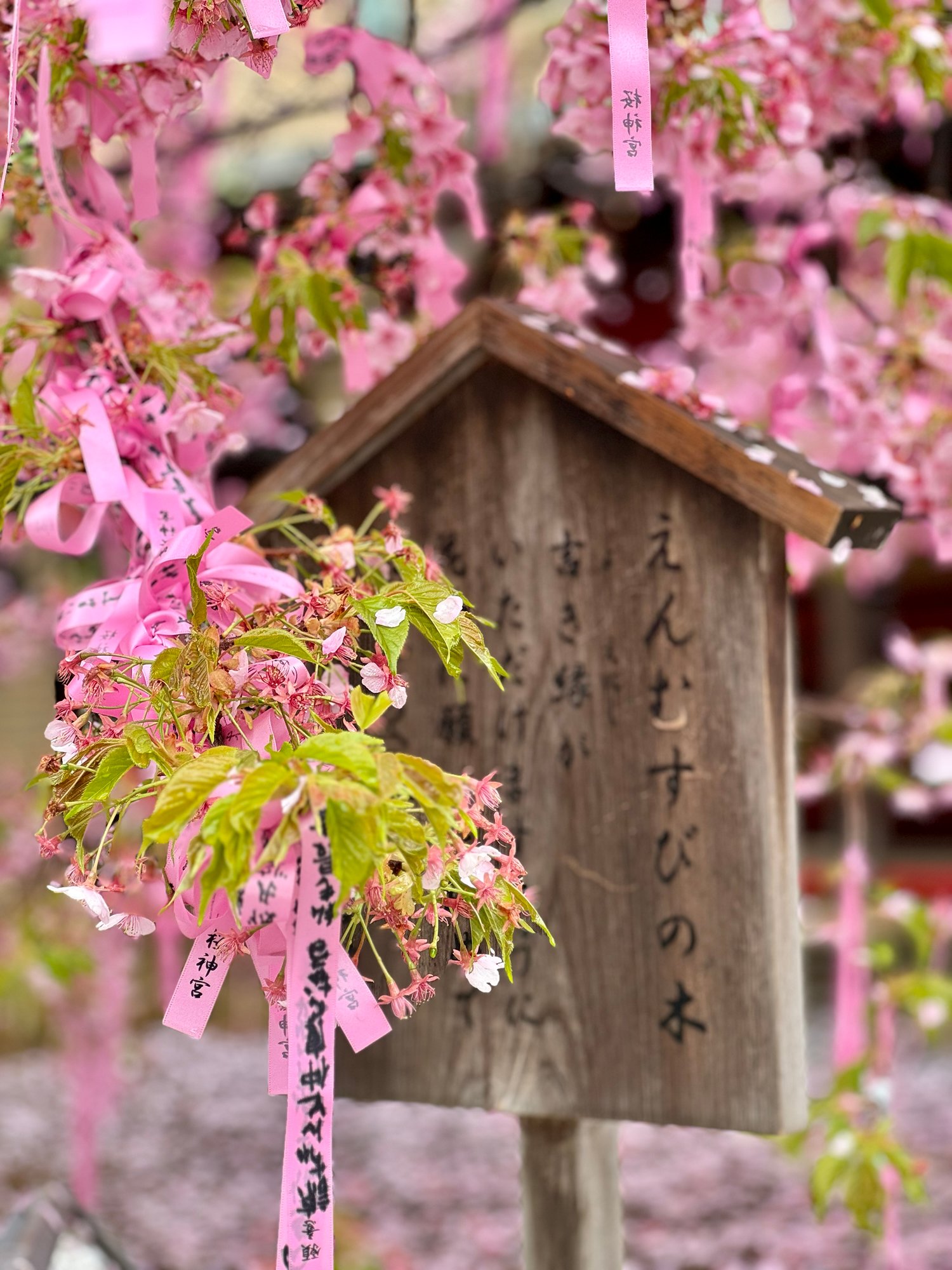
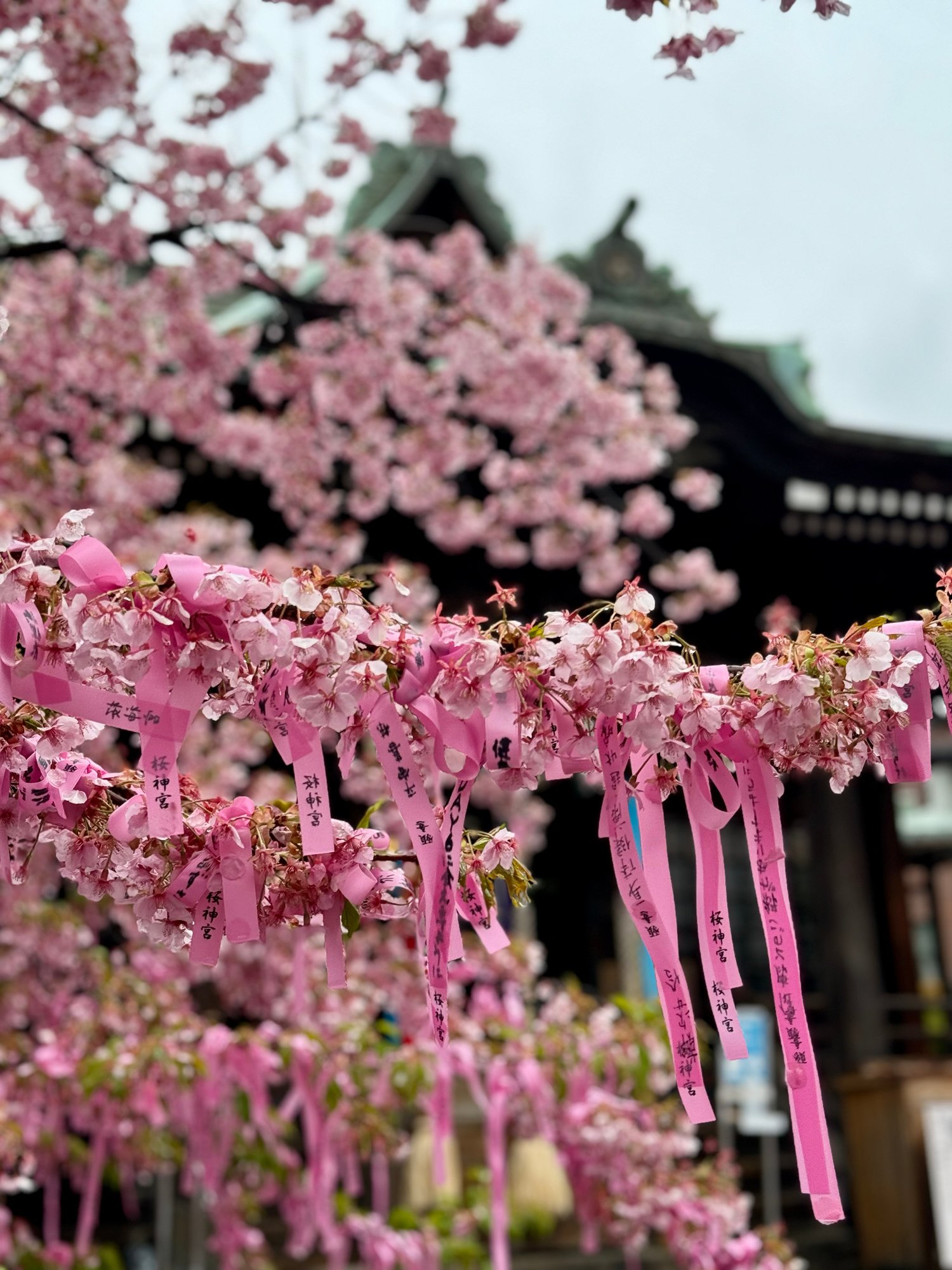
Sakura Jingu (桜神宮) in Setagaya is a sanctuary dedicated to enmusubi – the Japanese concept of binding relationships, most commonly associated with romantic love. Here, the tradition is as visual as it is spiritual: visitors write their wishes on pink hana-musubi (花結び), flower ribbons, and tie them directly to the cherry blossom branches. During the bloom, the result is a breathtaking cascade where the deep pink of the petals echoes the silk of the ribbons against the weathered wood of the shrine.
Getting There: From Shibuya Station, take the Tokyu Den-en-toshi Line to Sakura-shinmachi Station (approx. 10 mins), then it’s a short, 2-minute walk to the shrine.
We came for the blossoms, unaware of the ribbons. Finding the trees draped in both – the flowers and the collective hopes of everyone who had visited before us – felt like a small, unexpected gift.
Two Trees and a Green Visitor
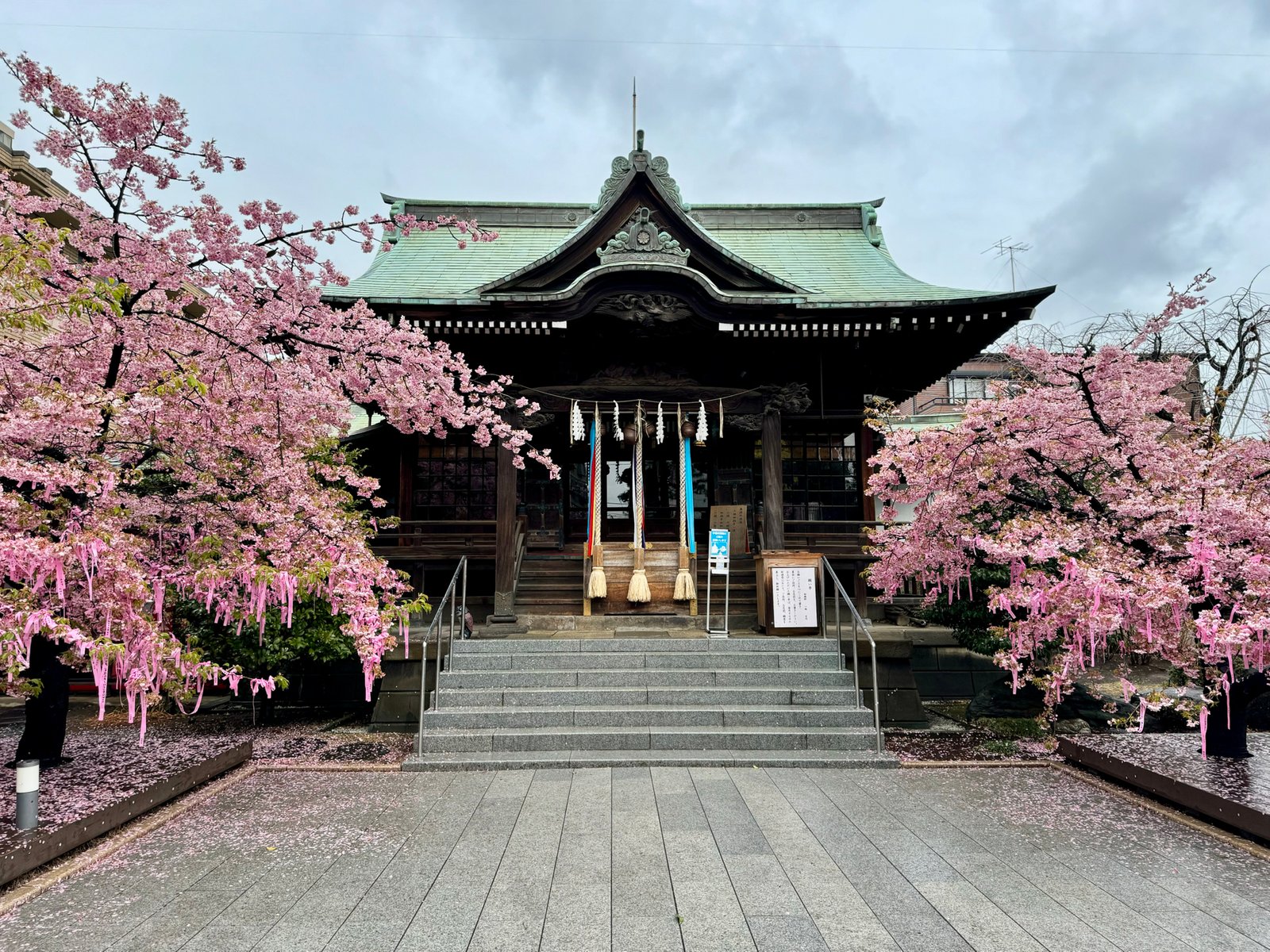
There are only two Kawazu-zakura trees at Sakura Jingu, flanking the main hall. For a shrine so famous for its namesake, the scale is surprisingly modest. But that is exactly what makes it special: two trees in exuberant bloom, wrapped in silk and swarming with life.
The Mejiro was the pleasant surprise. These Japanese White-eyes – tiny, olive-green birds with distinctive white rings around their eyes – darted through the branches while we watched, hopping from blossom to blossom. They looked cheerful in the way only small birds can, and their presence felt like a divine endorsement of the entire scene. We stood watching them for much longer than was strictly necessary.
The Seasonal Goshuin
One more thing to know: during cherry blossom season, Sakura Jingu offers a limited-edition Goshuin (御朱印), the traditional hand-stamped calligraphy collected by pilgrims. The seasonal version here – Sakura-gentei Goshuin (桜限定御朱印) – is a work of art, featuring intricate pink cherry blossom motifs sealed in shimmering golden ink. It has become a “must-have” for collectors, so if you are a Goshuin-cho (御朱印帳) enthusiast, ensure you visit while the flowers are out.
Edogawa Riverside: The Long Walk
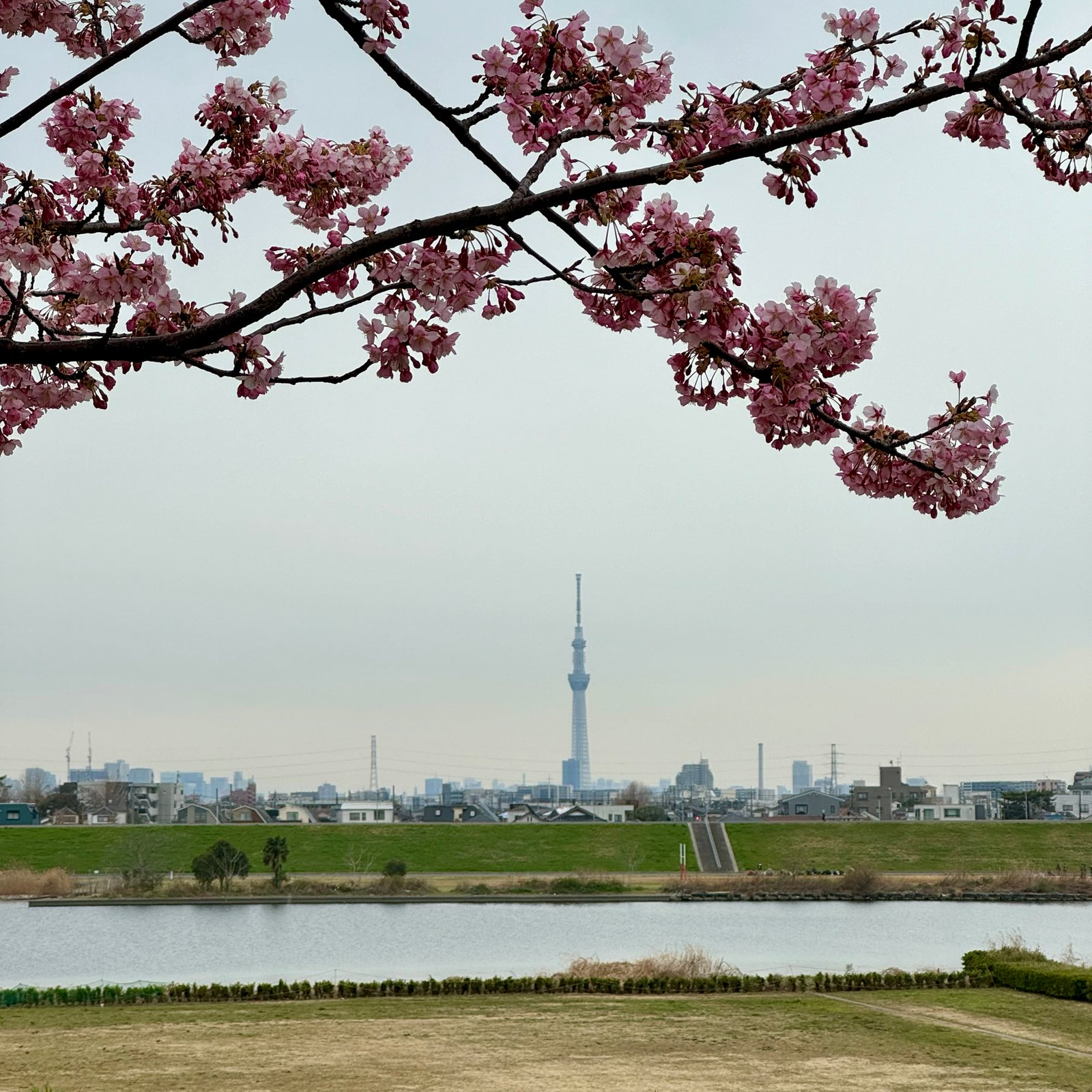
The Edogawa (江戸川) is the river that marks the border between Tokyo and Chiba. To get there, you’ll take a 15-minute walk from JR Ichikawa Station through a quiet residential neighborhood. Once you reach the river, the path opens up into a long, peaceful stretch along the embankment where kawazu-zakura line the way in both directions.
Getting there: Take the JR Sobu/Chuo Line to Ichikawa Station (市川駅) in Chiba Prefecture. Use the South Exit and walk about 15 minutes toward the riverside.
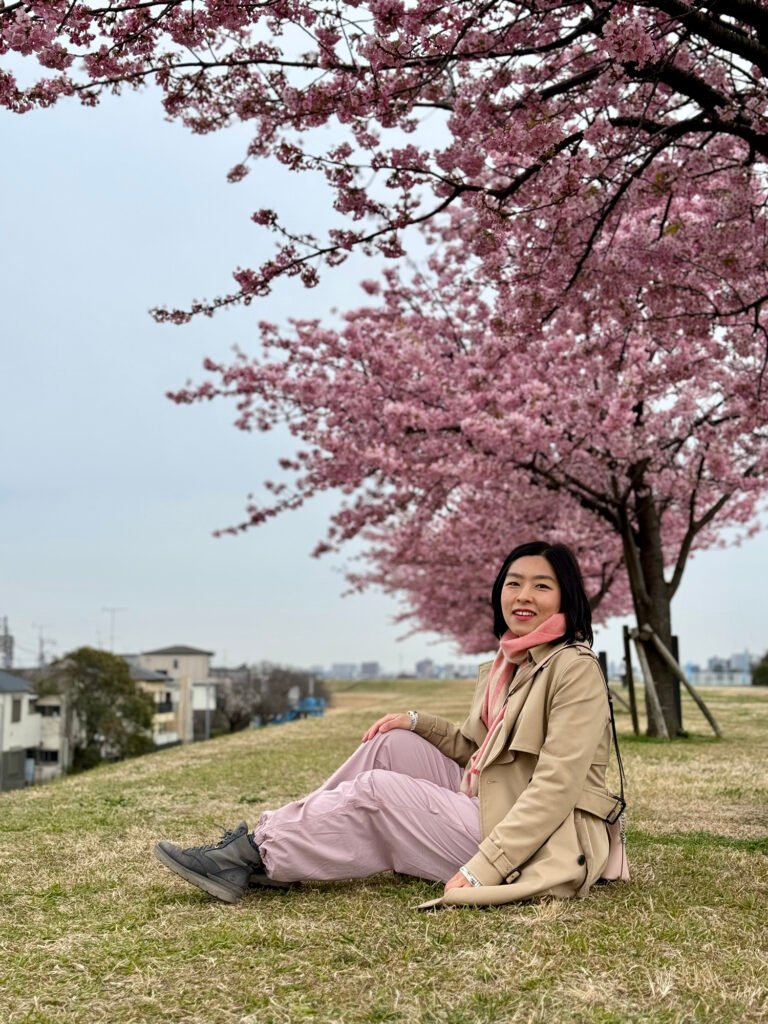
There are no “famous” landmarks here- just the river, the blossoms, and local families out for a stroll, a picnic, or a family photo shoot. Walking this long stretch of pink without a specific destination felt like exactly the right rhythm for the day. Under the trees, the unhurried atmosphere was the whole point. If you look closely toward the horizon on the opposite side of the river, you can see the Tokyo Skytree standing tall in the far, far distance. Seeing it from this vantage point only reinforces how much the pace has slowed down out here.
Pro tip: Because the Edogawa riverside is a residential area rather than a tourist park, you won’t find any food stalls or trash cans along the path. Before you leave JR Ichikawa Station, stop by the Shapo shopping mall (connected to the station) or a nearby convenience store to pick up drinks and snacks. Also, remember the “leave no trace” rule: in Japan, it’s standard practice to carry your trash back home or to the station with you. Using the restrooms at the station before you start your walk is also a smart move, as public facilities along the embankment are few and far between!
Kyu-Nakagawa Riverside: Sakura & the Skytree
The Kyu-Nakagawa (旧中川), or “Old Middle River,” is a quiet canal in eastern Tokyo – the kind of place you end up when you are following a tip rather than a guidebook.
Getting There: Take the JR Sobu Line to Hirai Station (平井駅). Use the North Exit and it is about an 11-minute walk to the riverside.
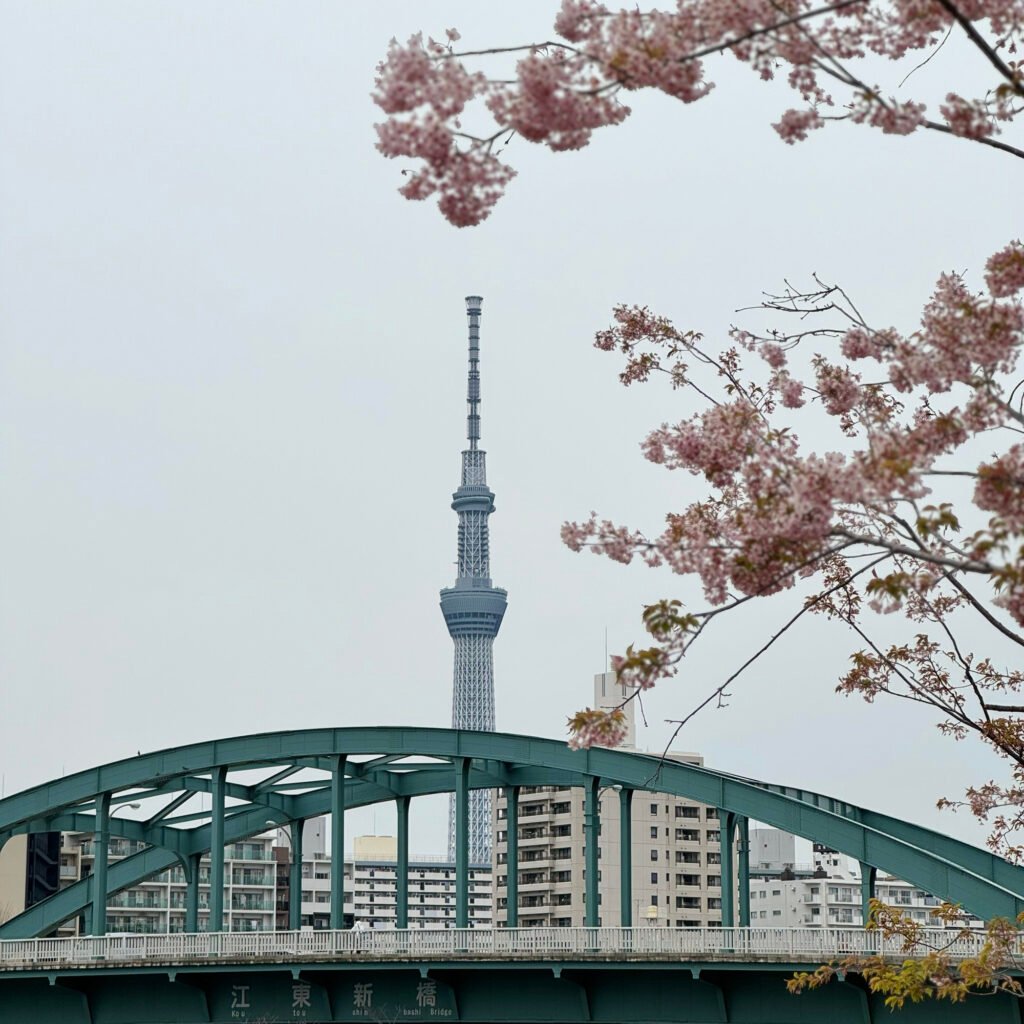
We walked north from Hirai Station along the riverside path, where kawazu-zakura line the banks in both directions. As we turned a bend in the path, the Tokyo Skytree appeared suddenly above the treeline, framed perfectly by the deep pink blossoms against the grey morning sky. It was one of those shots that felt both accidental and perfect – a high-tech icon softened by the vivid, sprawling branches of early spring.
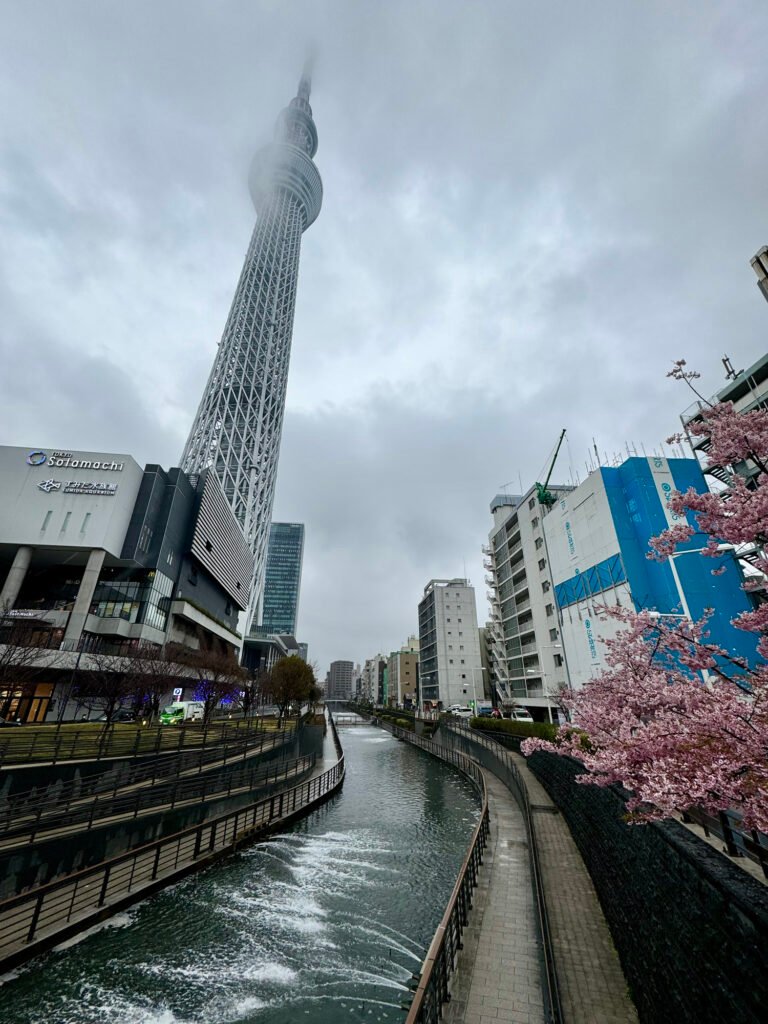
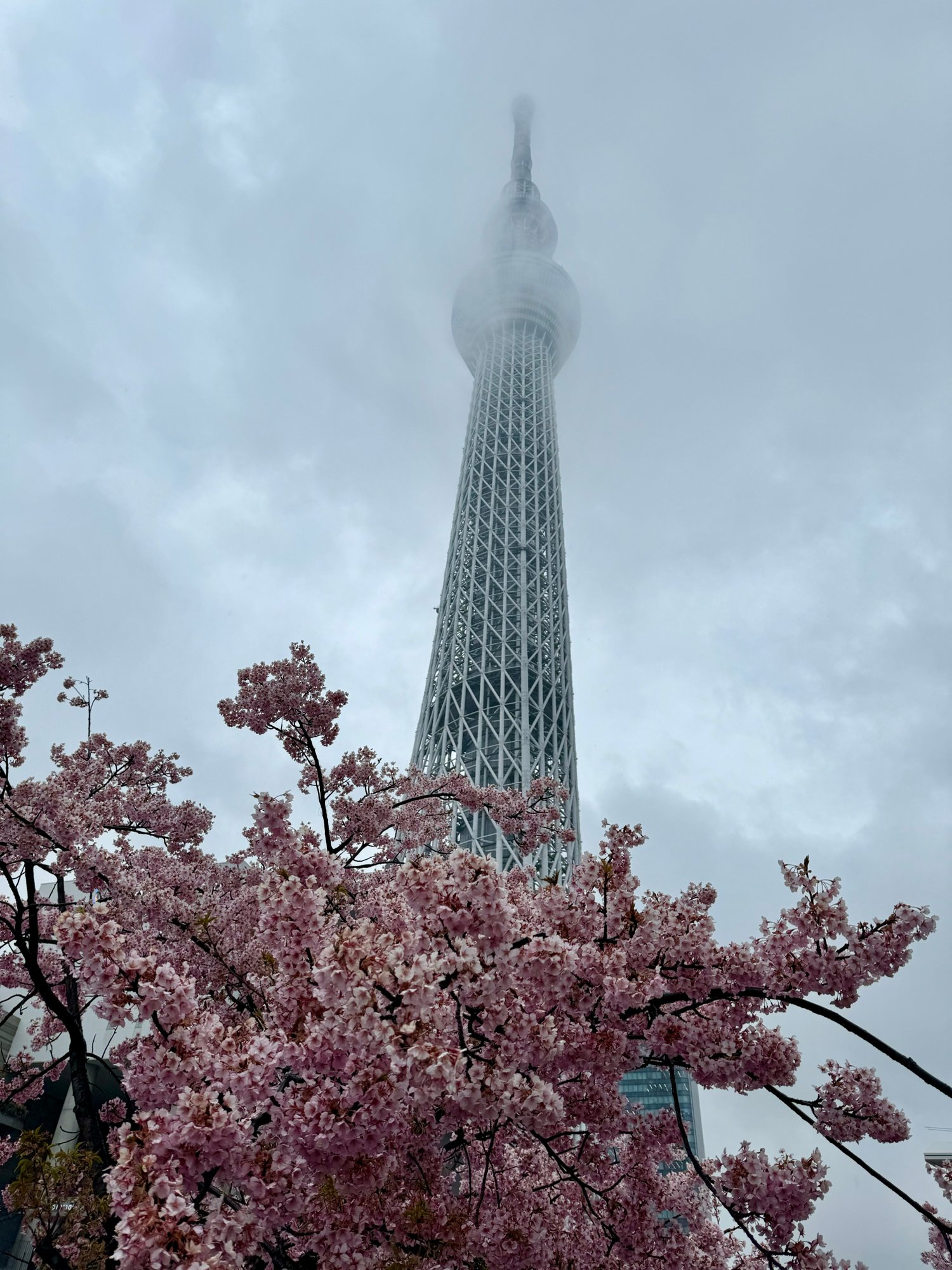
Pro Tip: For the absolute best “Sakura + Skytree” photo, head toward the Fureai Bridge (ふれあい橋). The curve of the river at this specific point aligns the Skytree directly between the rows of cherry trees. It’s a local favorite for a reason!
From the River to the Sky
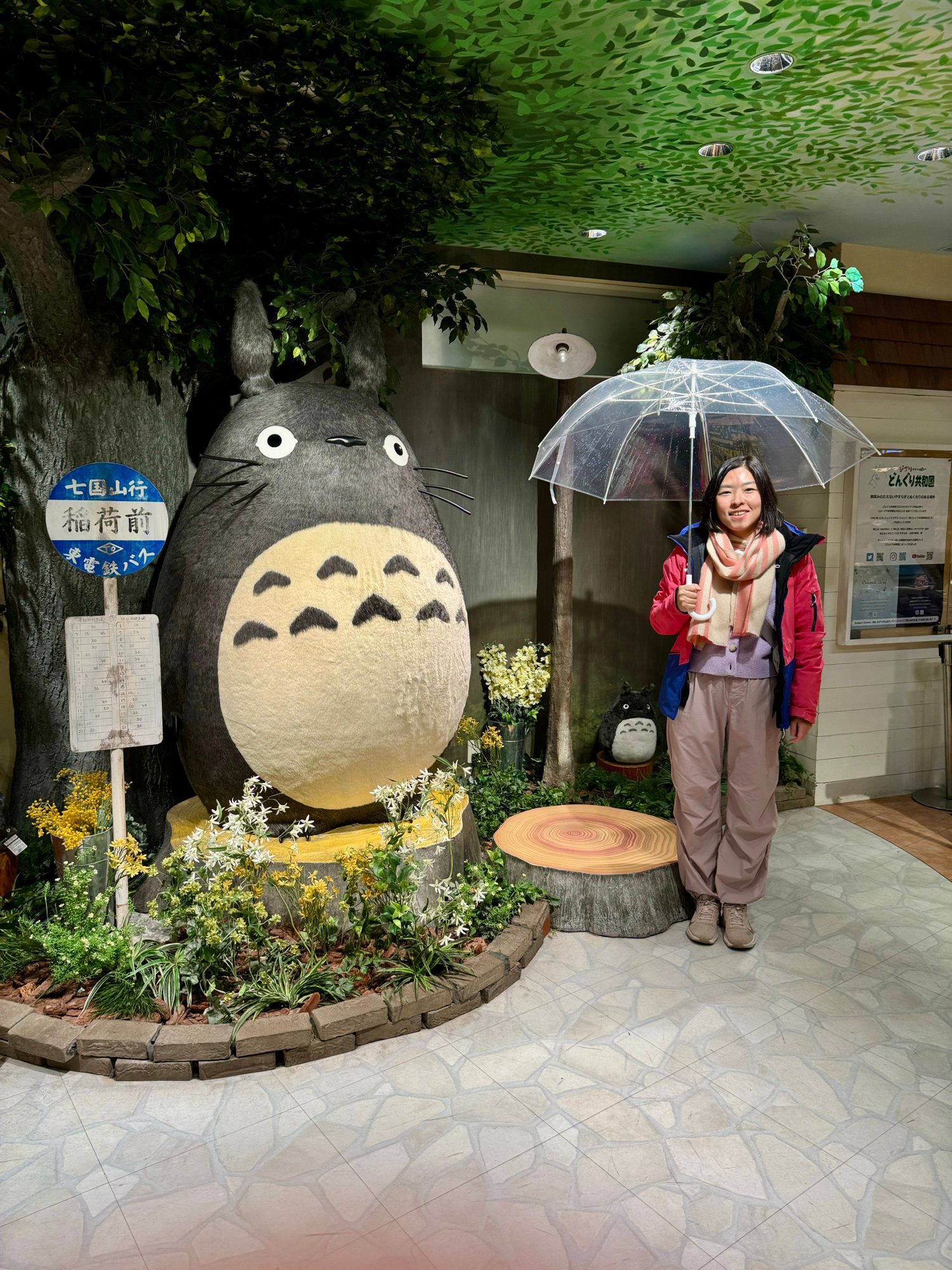
After soaking in the riverside views, it felt only right to head toward the landmark we’d been eyeing from a distance. We made our way to Tokyo Solamachi, the massive shopping complex at the base of the Skytree. As fans of Hayao Miyazaki, the Donguri Republic (the official Studio Ghibli store) was a mandatory stop. It’s filled with Totoro and Catbus treasures that are impossible to resist.
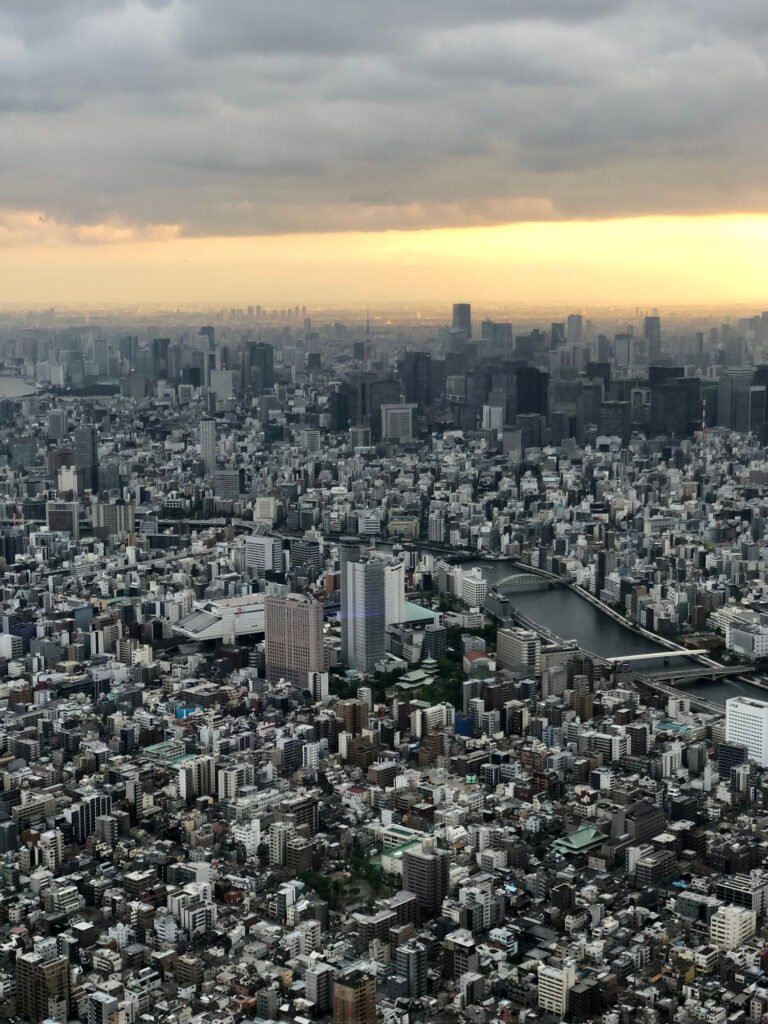
We also decided to go up to the Skytree Tembo Deck. Since the Skytree was built, Tokyo’s skyline has sprouted many new rivals – like the soaring Shibuya Sky or Azabudai Hills – but the view from the Skytree remains a classic. Standing at 634 meters, it offers a sense of the city’s sheer, unending scale that newer, shorter decks can’t quite match. If you haven’t been, it is definitely still worth the trip.
Shiba Park & Zojoji Temple: The Iconic Frame
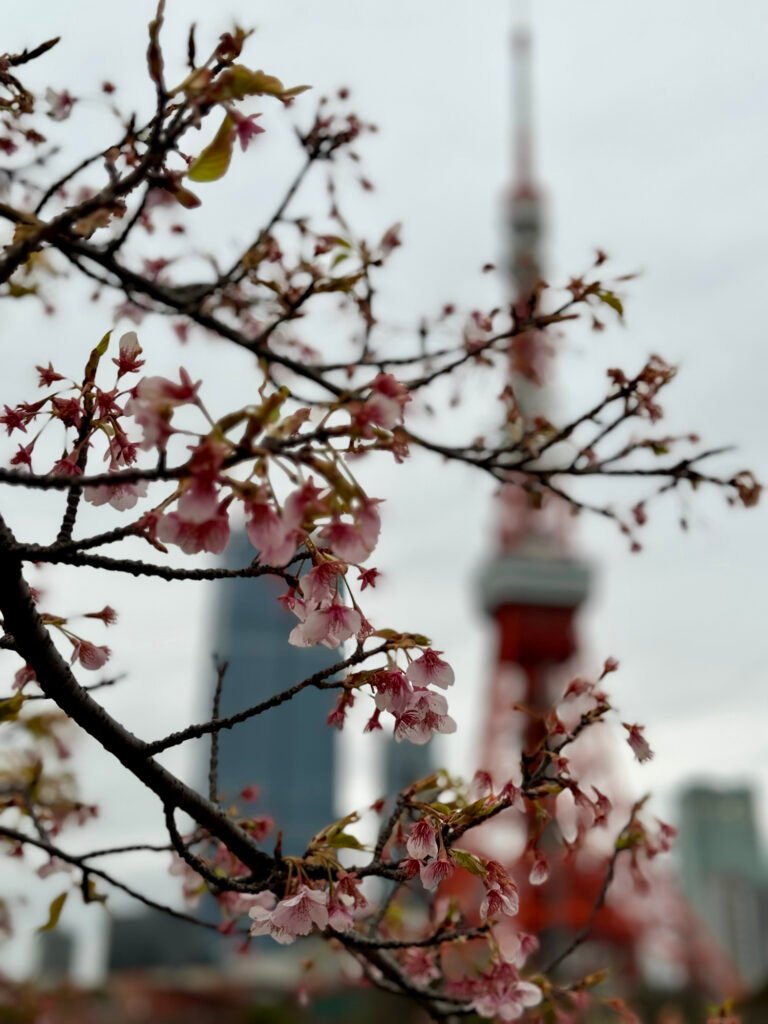
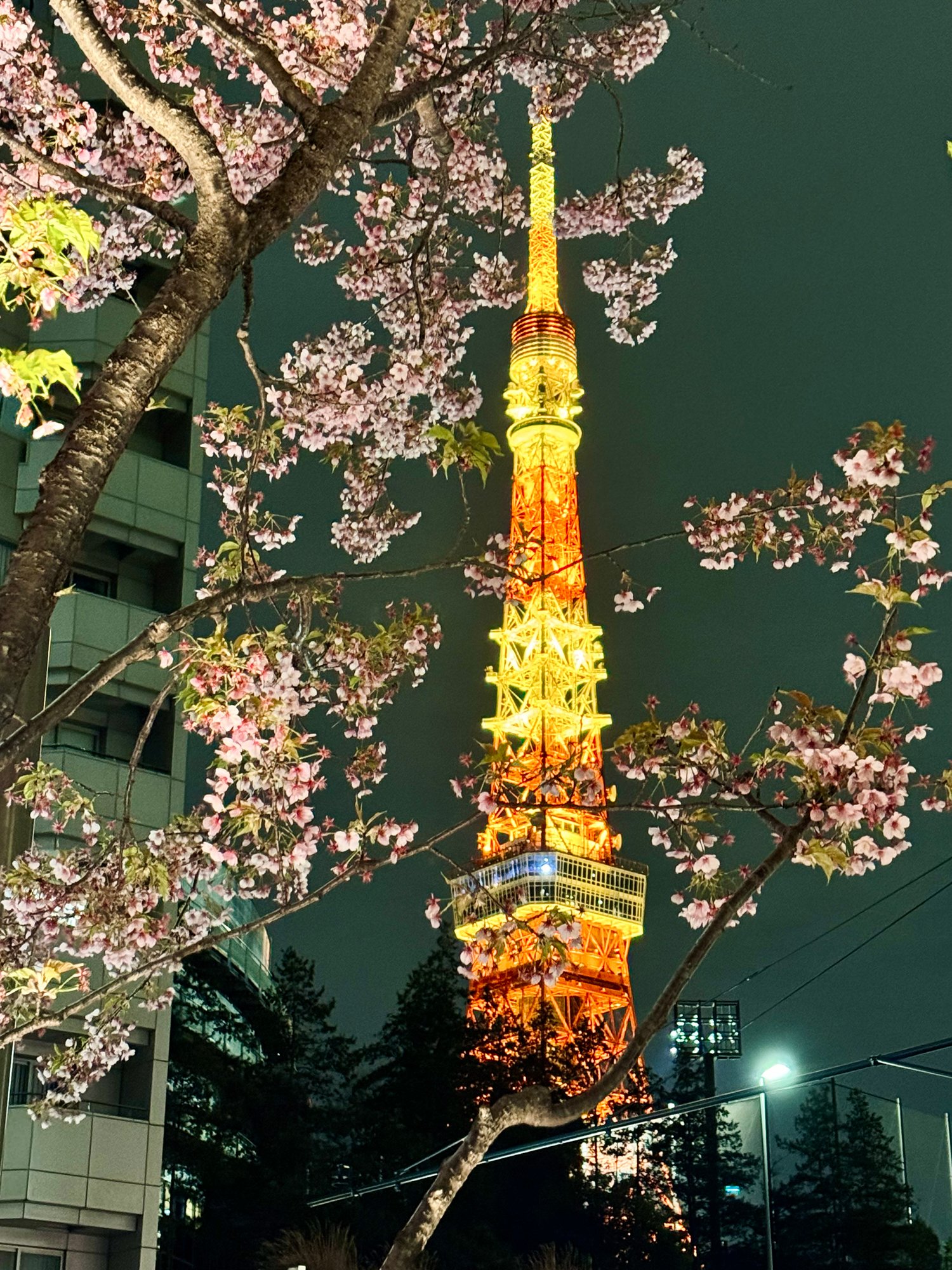
Shiba Park, which surrounds Zojoji Temple, is where you go for the postcard shot: cherry blossoms in the foreground with the glowing orange of Tokyo Tower filling the sky behind them. It is exactly as photogenic as it sounds, and it is correspondingly busier than the riverside paths of eastern Tokyo.
Getting there: The easiest access is via Onarimon Station (Mita Line) or Daimon Station (Asakusa/Oedo Lines). It’s a pleasant 5-to-10-minute walk from either station.
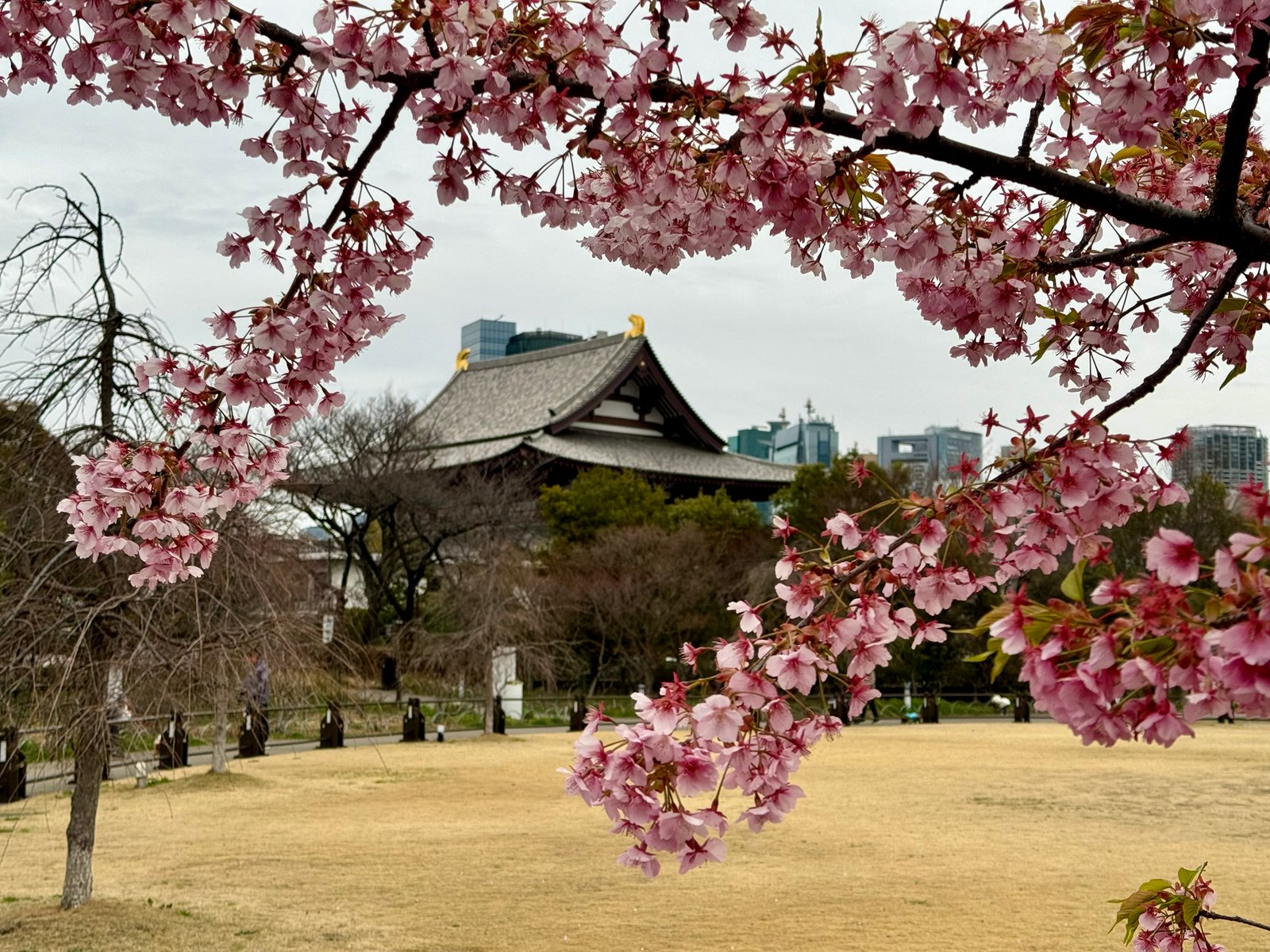
The temple itself (Zojoji, 増上寺) deserves more than a quick photo stop. Founded in 1393, its grand, weathered presence feels worlds away from the modern city. The main gate you walk through, the Sangedatsu-mon, is a survivor – it is the only part of the original temple complex that escaped the bombings of World War II, making it one of the oldest wooden structures in Tokyo.
Beyond the gate, the Tokyo Tower rises improbably behind the main hall like a piece of architecture from a different century. The contrast is genuine, striking, and a little absurd.
Timing the Bloom
It is important to note that the primary trees here are Somei Yoshino (染井吉野樱), which typically hit peak bloom from late March to early April. If you are visiting in early March, you will likely find pre-bloom buds or just the very beginning of the white-and-pink arrival. However, Shiba Park does have several early-blooming varieties scattered throughout the grounds that provide a beautiful splash of color for early-season visitors. Keep an eye out for the weeping cherry trees (Shidare-zakura) and plum trees (Ume) – their deeper pink and magenta hues are especially striking against the dark wood of the temple.
Azabudai Hills: Night Sakura & Tokyo Tower
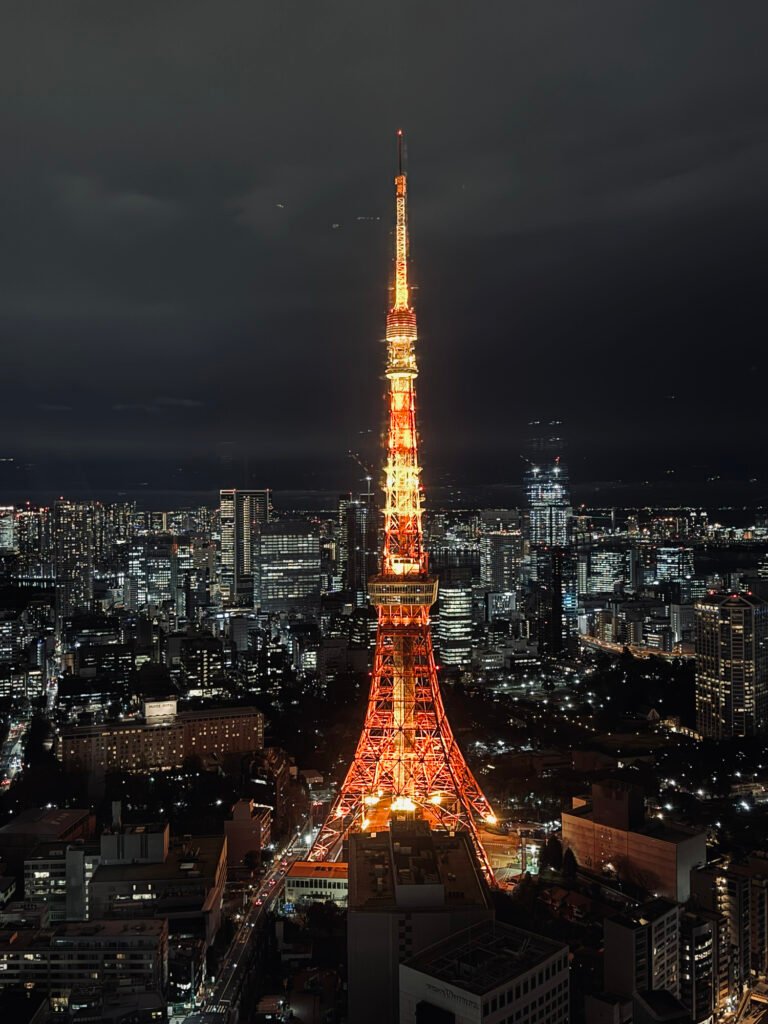
End your day here. The Azabudai Hills complex in Minato Ward is Tokyo’s newest landmark, having opened in late 2023. It is a architectural marvel of undulating greenery and glass, but for the spring traveler, the real draw is the Mori JP Tower. Its 33rd-floor Sky Lobby offers what is, frankly, one of the most stunning night views of Tokyo Tower I’ve ever encountered – the icon lit orange against the ink-black sky, while illuminated kawazu-zakura trees glow like pink neon in the plaza far below.
Getting There: Directly connected to Kamiyacho Station (Hibiya Line, Exit 5). You can also walk here in about 15 minutes from Shiba Park.
Accessing the View
Starting April 2024, the Sky Lobby is no longer a free walk-in area. Access is now reserved for building tenants, residents, or customers of the 33rd-floor venues.
The easiest and most rewarding way to get in is to visit the Sky Room Cafe & Bar (Operating Hours: 10:45 AM – 9:00 PM). It is surprisingly affordable for such a premium location; ordering a drink or a dessert grants you full access to the viewing gallery. It’s the perfect place to sit back and watch the city lights flicker to life.
More Kawazu-Zakura Spots Worth Knowing
While we spent our time at the six locations above, Tokyo has a deeper kawazu-zakura circuit for those who want to keep exploring. These spots consistently come up in local recommendations and remain high on our list for a return visit:
1. Oyoko River Promenade (大横川遊歩道) | Koto Ward
This is one of the highest concentrations of kawazu-zakura in the city, with roughly 100 trees lining a quiet canal. You get distant Skytree views and almost no crowds. It is often among the very first spots to bloom in Tokyo.
Getting There: From Kiba Station (Tozai Line), take Exit 1 and turn left along the river.
2. Shioiri Park (汐入公園) | Arakawa Ward
This park offers wide-open paths where rows of kawazu-zakura create a vibrant pink fringe along the Sumida River. It is a hidden gem for a more expansive, local feel and serves as another fantastic vantage point for the Tokyo Skytree. In the early morning or late afternoon, it’s a favorite for neighborhood joggers and families, making it the perfect spot to sit on a bench and simply watch the river go by.
Getting There: a pleasant 12-minute walk from Minami-Senju Station (JR Joban Line, Hibiya Line, or Tsukuba Express).
3. Inokashira Park (井の頭公園) | Kichijoji
This park is legendary for its peak-season somei yoshino, but the early-blooming varieties appear weeks before the masses arrive. Combining a stroll here with the cafes and boutiques of Kichijoji – voted one of Tokyo’s most livable neighborhoods – makes for a perfect afternoon.
Getting There: A 5-minute walk from Kichijoji Station (JR Chuo Line or Keio Inokashira Line).
4. Ikegami Honmonji Temple (池上本門寺) | Ota Ward
Founded in 1282, this historic temple features a dramatic five-story pagoda that survived the 1945 air raids. It is one of the earliest spots to bloom in southern Tokyo. The surrounding residential neighborhood is authentically local and peaceful.
Getting There: A 10-minute walk from Ikegami Station (Tokyu Ikegami Line).
5. Happo-en Garden (八芳園) | Shirokanedai
A 400-year-old Edo-period garden in one of Tokyo’s most exclusive neighborhoods. The kawazu-zakura bloom near the entrance and the historic Kochuan teahouse. The atmosphere here is exceptionally calm, offering a preserved slice of old Japan.
Getting There: A 1-minute walk from Shirokanedai Station (Exit 2).
6. Shinjuku Gyoen (新宿御苑) | Shinjuku
Because it houses over 70 cherry varieties, this national garden has the longest blooming season in the city. Their kawazu-zakura usually awaken in early to mid-February near the Yurinoki restaurant. It is a rare chance to experience this famous park without the usual peak-season crowds.
Note: This park has an entry fee (¥500) and specific opening hours.
Quiet Corners of the City
Gotokuji Temple & Sangenjaya
I first discovered Gotokuji Temple (豪徳寺) a year ago while wandering alone through a neighborhood that didn’t feel like it was performing for tourists. I liked it so much that I knew I had to bring my partner back on this trip.
Getting There: To reach Gotokuji Temple, take the Odakyu Line to Gotokuji Station or the Setagaya Line (a charming local tram) to Miyanosaka Station. From there, it’s a 5-minute walk. To explore Sangenjaya afterward, you can take a 15-minute stroll through the residential backstreets or hop back on the Setagaya Line tram to Sangenjaya Station.
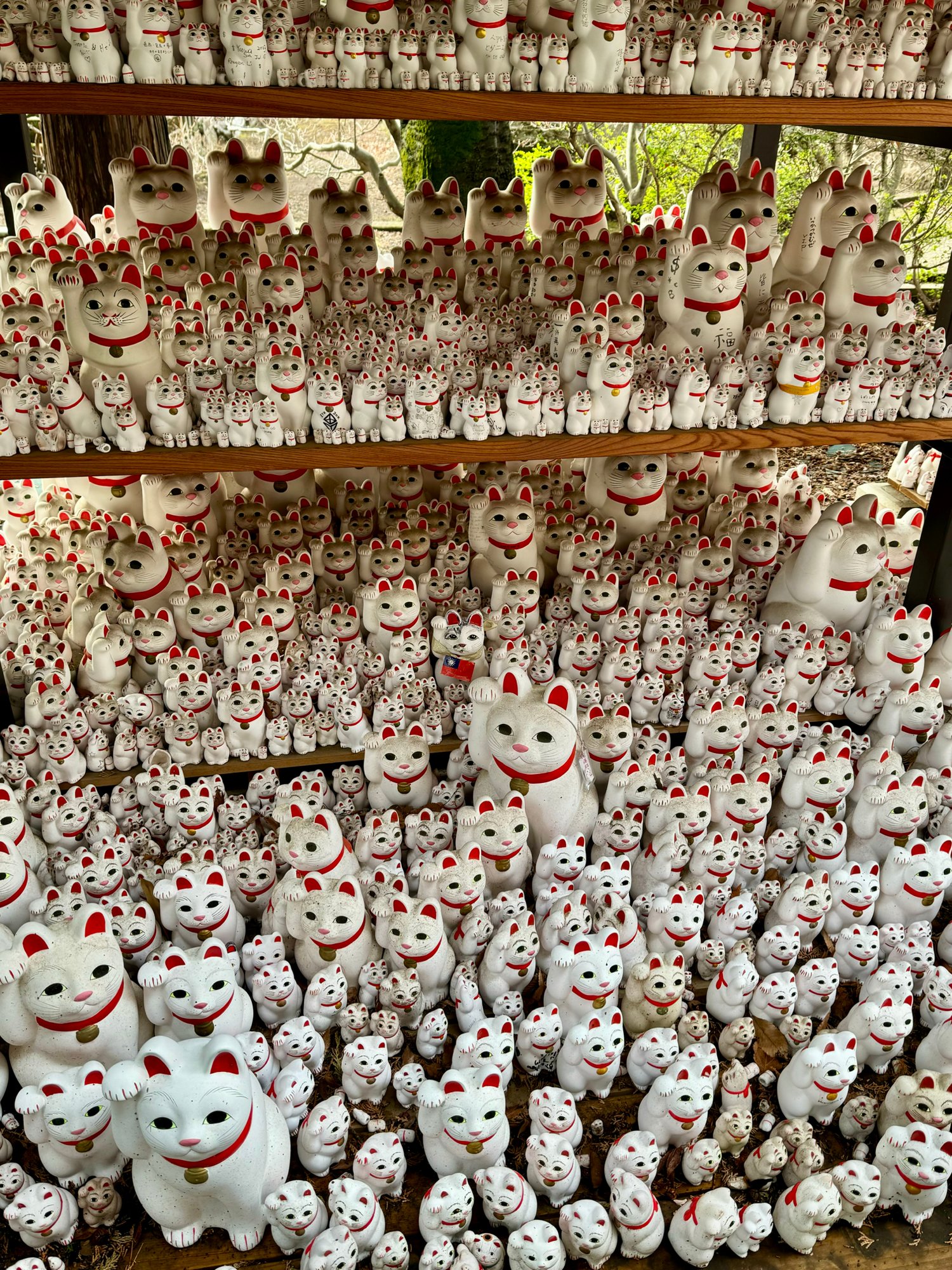
Gotokuji is famous as the legendary birthplace of the maneki-neko, the beckoning cat figurine ubiquitous across Japan. As the story goes, a feudal lord sheltering from a storm was beckoned inside the temple gates by a cat, narrowly avoiding a lightning strike. In gratitude, the lord became a patron of the temple. Today, visitors leave small white ceramic cats as offerings, resulting in one of the most arresting sights in Tokyo: thousands of beckoning cats arranged on shelves, all in slightly different sizes, all raising the same paw. There is something unexpectedly moving about it – the visual weight of so many collective small gestures.
But the real reason to come here is the neighborhood. The area stretching toward Sangenjaya (三軒茶屋) is the kind of Tokyo where locals actually live. It is a place that hits that elusive, perfect balance between trendy and retro. As you wander the narrow alleyways, you’ll find “Zakka” lifestyle shops, creative Japanese eateries, and cozy bakeries selling fresh melon pan sitting right alongside gritty, old-school shopping arcades (shotengai) that smell of grilled yakitori and toasted sesame.
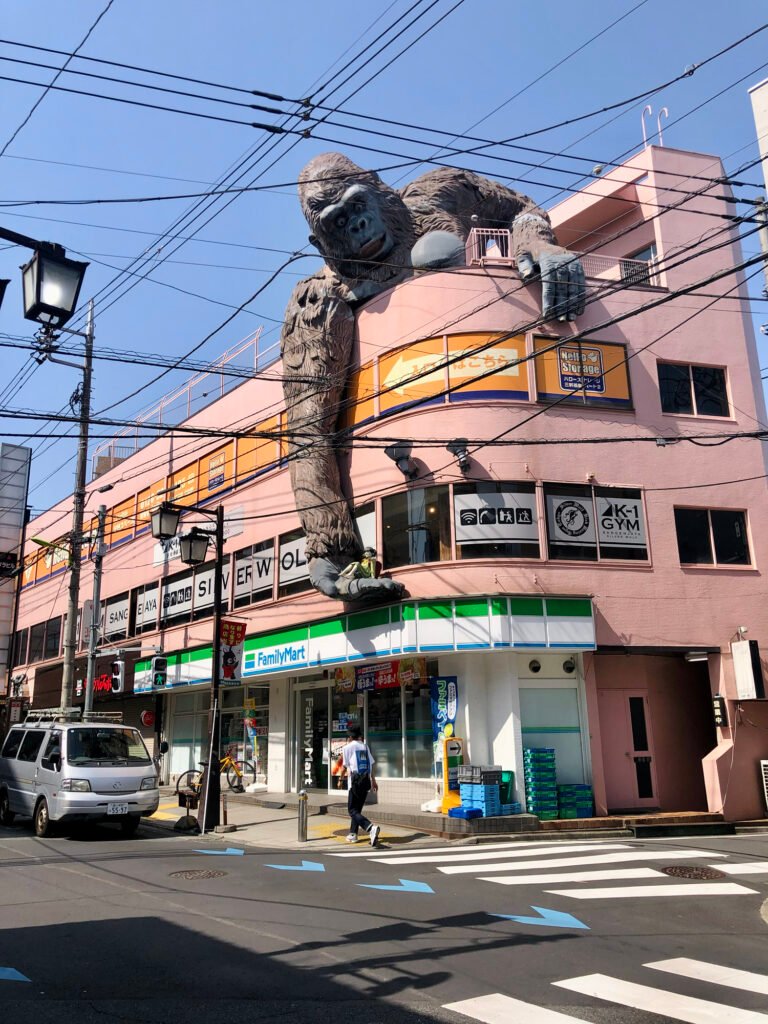
It manages to feel “appropriately stylish yet endearingly unpolished” – a mix of modern coffee culture and Showa-era nostalgia. While exploring the backstreets, look up and you might spot the neighborhood’s most famous resident: a giant King Kong statue perched on the side of a building. It’s exactly the kind of quirky, kitschy landmark that makes the area feel so personal. We spent the afternoon moving at the pace the neighborhood set: easy, warm, and completely unhurried.
Nezu Museum
The Nezu Museum (根津美術館) in Omotesando is a place that quietly earns its reputation without ever needing to announce it. The experience begins before you even see an exhibit. The museum, designed by famed architect Kengo Kuma, is famous for its entryway: a long, bamboo-lined corridor that serves as an architectural “reset,” slowing your heart rate before you’ve even arrived.
Getting There: Take the Ginza, Chiyoda, or Hanzomon Lines to Omotesando Station. Use Exit A5 and walk about 8–10 minutes.
Practical Details: Open Tuesday–Sunday, 10:00 AM – 5:00 PM (Last entry 4:30 PM). Admission is ¥1,300 (standard) or ¥1,500 for special exhibitions. Online reservations are highly recommended.
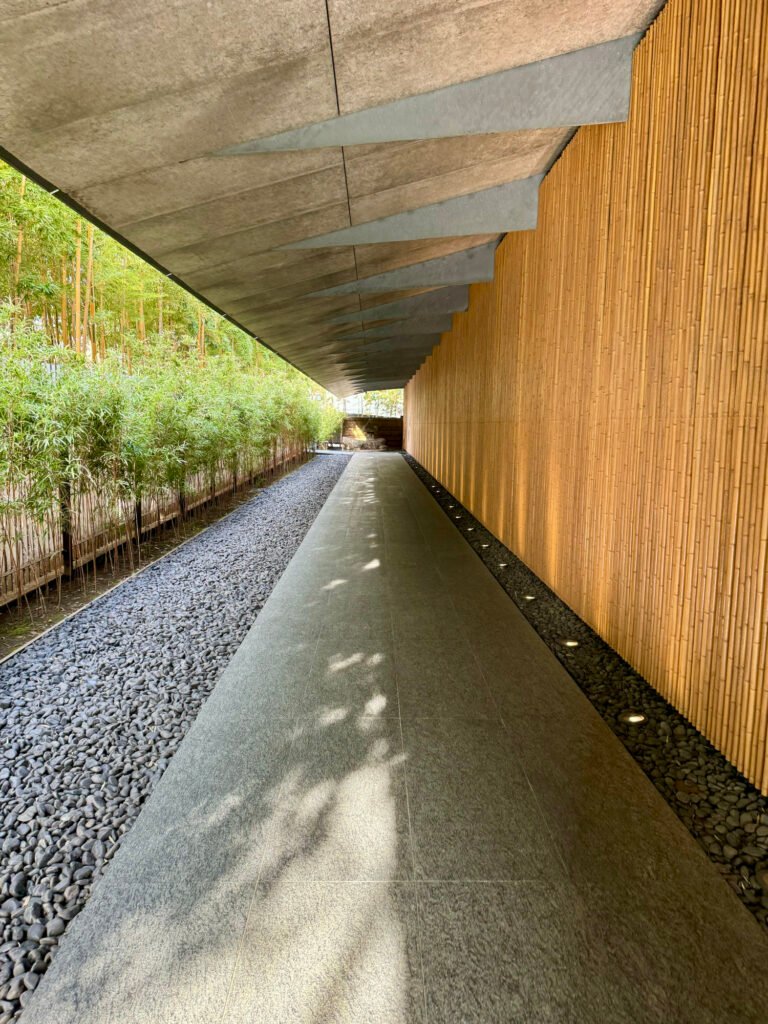
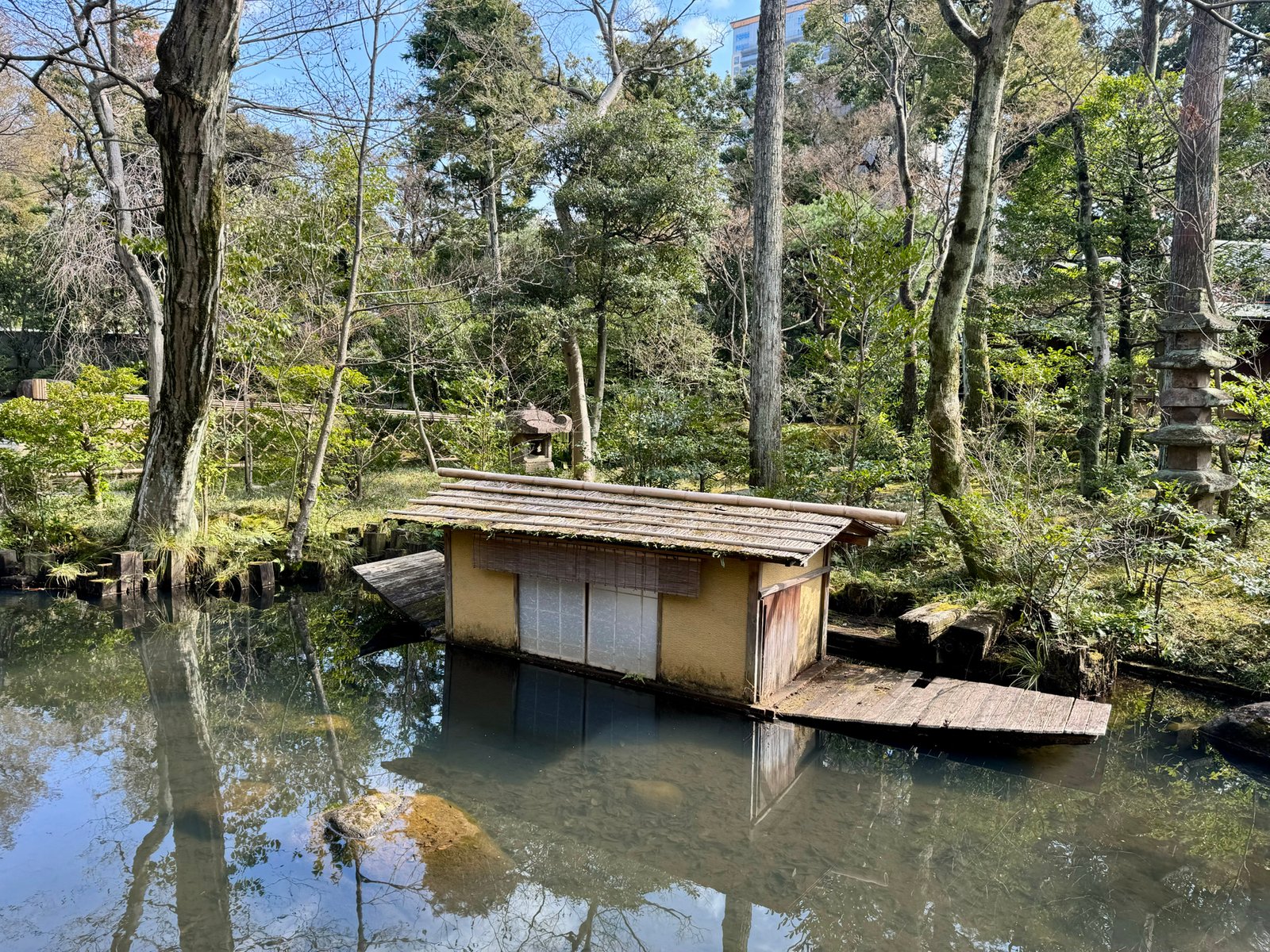
We spent a couple hours in the galleries and the sprawling garden. The garden in particular – a traditional Japanese landscape with stone paths, ponds, and hidden teahouses – felt almost entirely ours on our cloudy afternoon. The scale and the stillness make you forget you are in the heart of one of the world’s busiest cities.
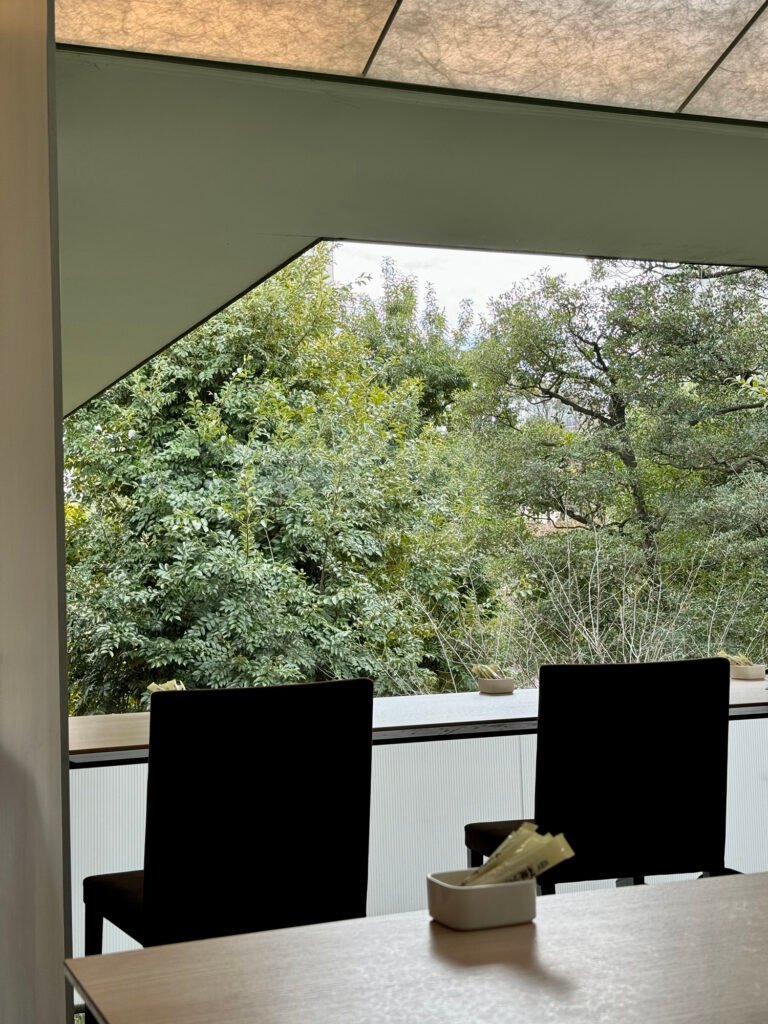
Afterward, we retreated to the museum cafe. The first thing you see is a massive wall of glass facing the woods, framing the garden like a living painting. We ordered matcha lattes and cake, found a table by the window, and stayed much longer than planned. The lighting was calm, the space was neat, and the matcha was good. It’s the kind of cafe that makes you truly understand why Japanese design is so universally admired.
Where to Eat
Tokyo’s food scene is one of the best in the world, full stop. What follows isn’t a comprehensive list – it barely scratches the surface. These are the places we actually ate, organized by style, offered as starting points rather than a definitive guide.
Seafood Don (Kaisen-don)
Tokyo’s proximity to the sea means a bowl of kaisen-don operates on a completely different level here. The format – vinegared rice layered with the freshest seasonal catch – is deceptively simple, but the quality of the ingredients is everything.
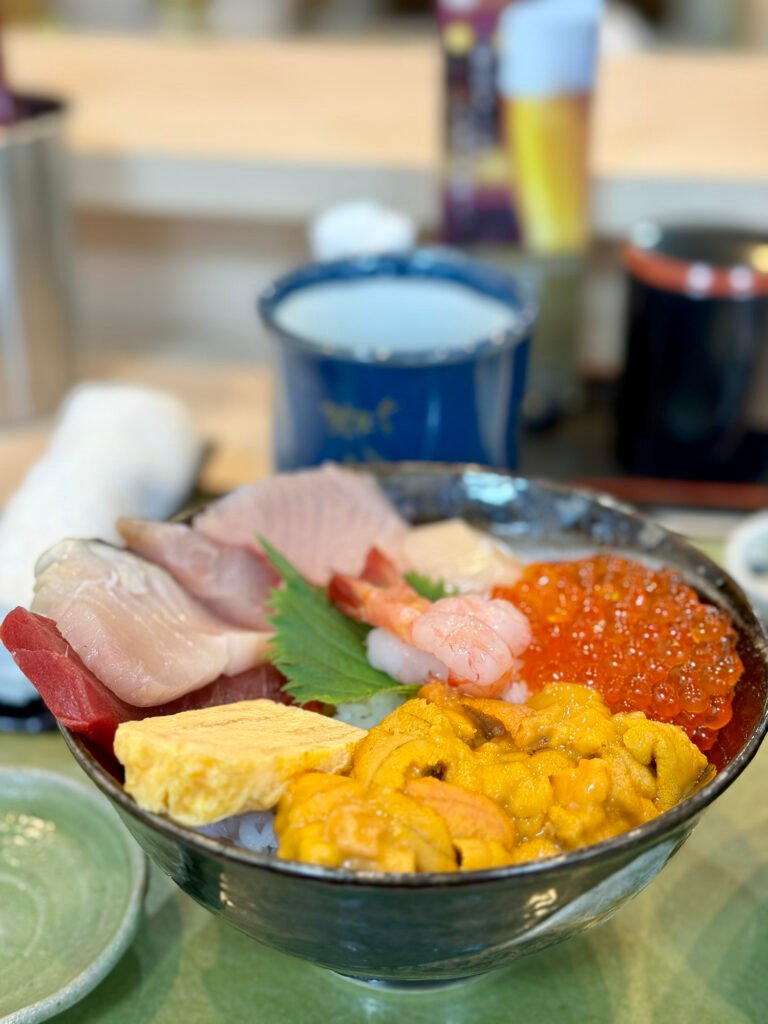
Where we went: Sushikuni 鮨國 | Tsukiji Outer Market
The advice we received was specific: get there early, bring cash, and head straight to Sushikuni. We arrived before 10:00 AM, queued before the doors opened, and were seated in the first batch. The don was the kind of bowl that earns superlatives. Uni, ikura, shrimp, tuna, tamago – all of it absurdly fresh in the way that things purchased close to the source tend to be. The uni (sea urchin) had no metallic edge, and the shrimp had a sweetness that lingered.
- Note: Cash only. Expect a queue even on weekdays.
Omakase Sushi
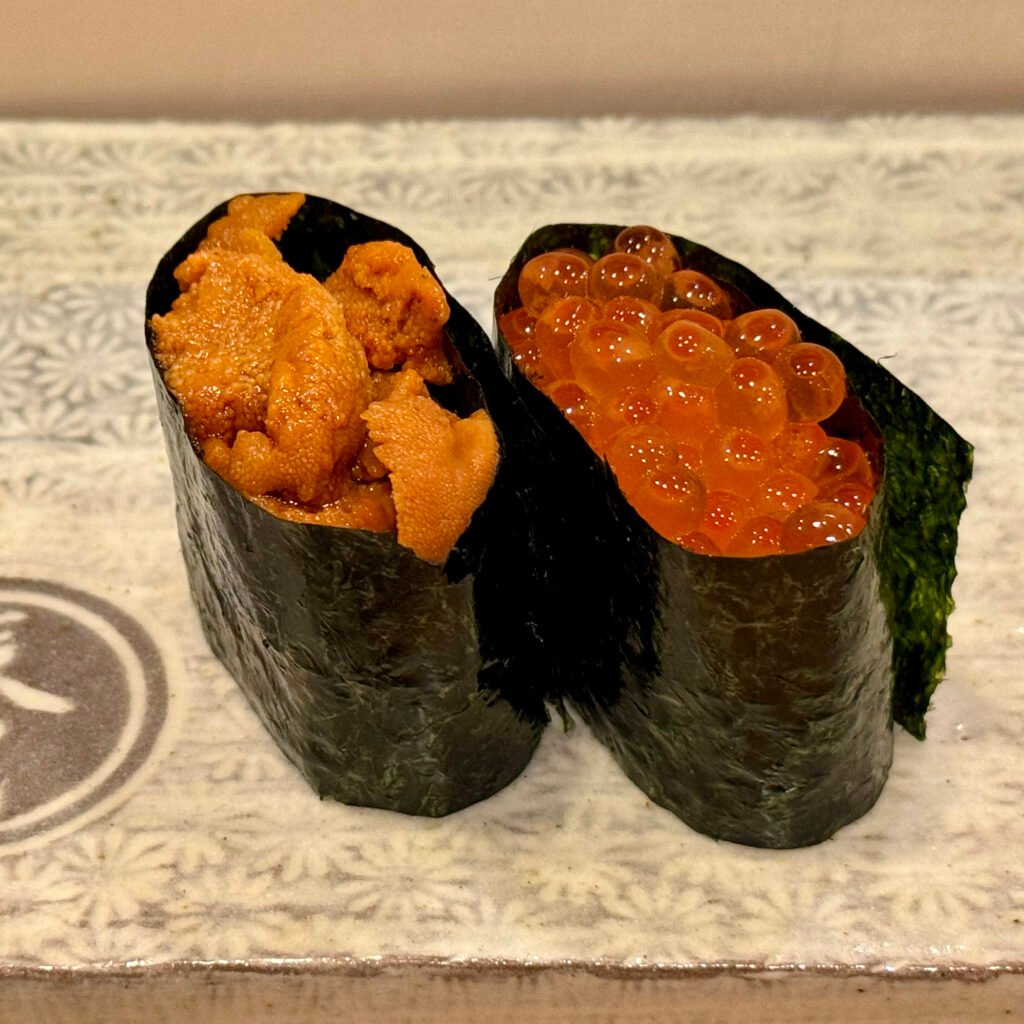
Counter omakase, where the chef decides the sequence and presses each piece in front of you, is an essential Tokyo experience. Tokyo does it at every price point, from high-valued lunch to multi-hour evenings that cost more than a flight.
Where we went: Sushi Tatsumi 鮨辰巳 | Ginza
We booked lunch here to experience Ginza-quality sushi at a fraction of the dinner price (or the cost of a similar meal in the Bay Area). Food was excellent. However, the lunch crowd was almost entirely tourists. If an authentic local atmosphere is your priority, consider an evening reservation (though be prepared for a significantly higher price point).
Izakaya
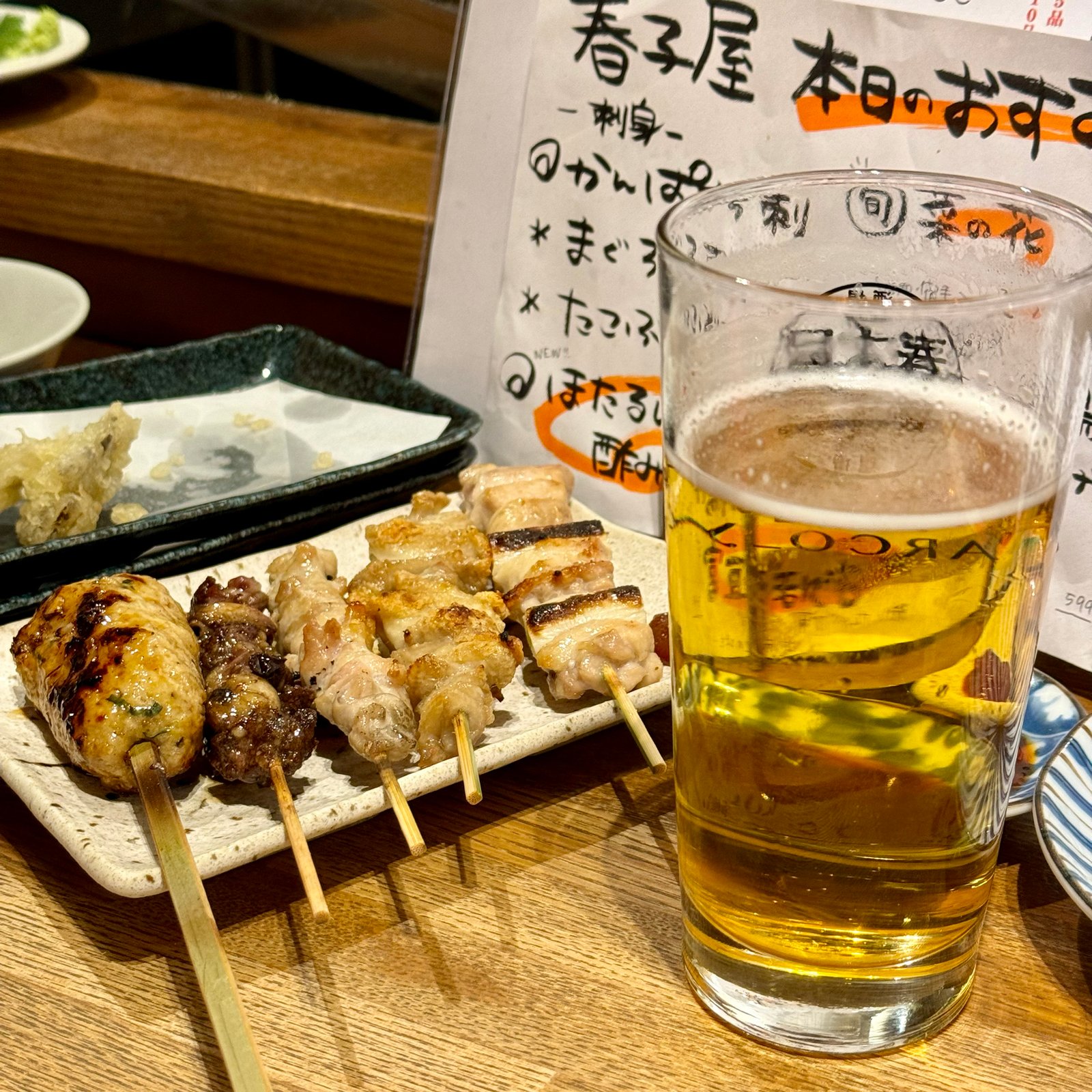
An izakaya is less a restaurant and more a mode of eating – small plates, skewers, cold beer, and a warm, noisy atmosphere.
Where we went: 串焼きと天ぷら 春子屋 | Akihabara
Our arrival-night dinner. It was the perfect first meal: unpretentious yakitori and tempura in a local spot near our hotel that didn’t try to be anything other than what it was – entirely satisfying.
Soba
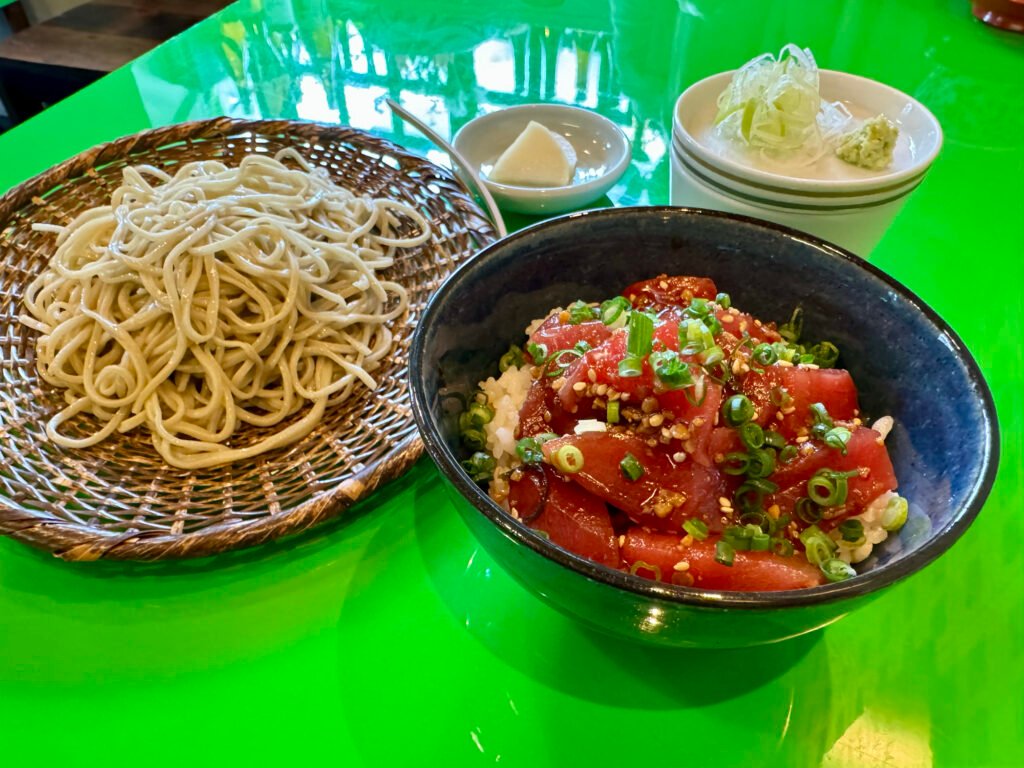
Hand-cut buckwheat noodles, served simply but deliciously – cold with dipping sauce or hot in broth. Soba is one of those foods that rewards paying attention to where it came from and who made it.
Where we went: 手打ち 弥勒 | Sangenjaya
Located near Gotokuji, this spot serves excellent hand-cut buckwheat noodles. We had it for lunch after visiting the “Cat Temple.” It was simple, clean, and perfectly suited to the unhurried rhythm of that neighborhood.
Ramen
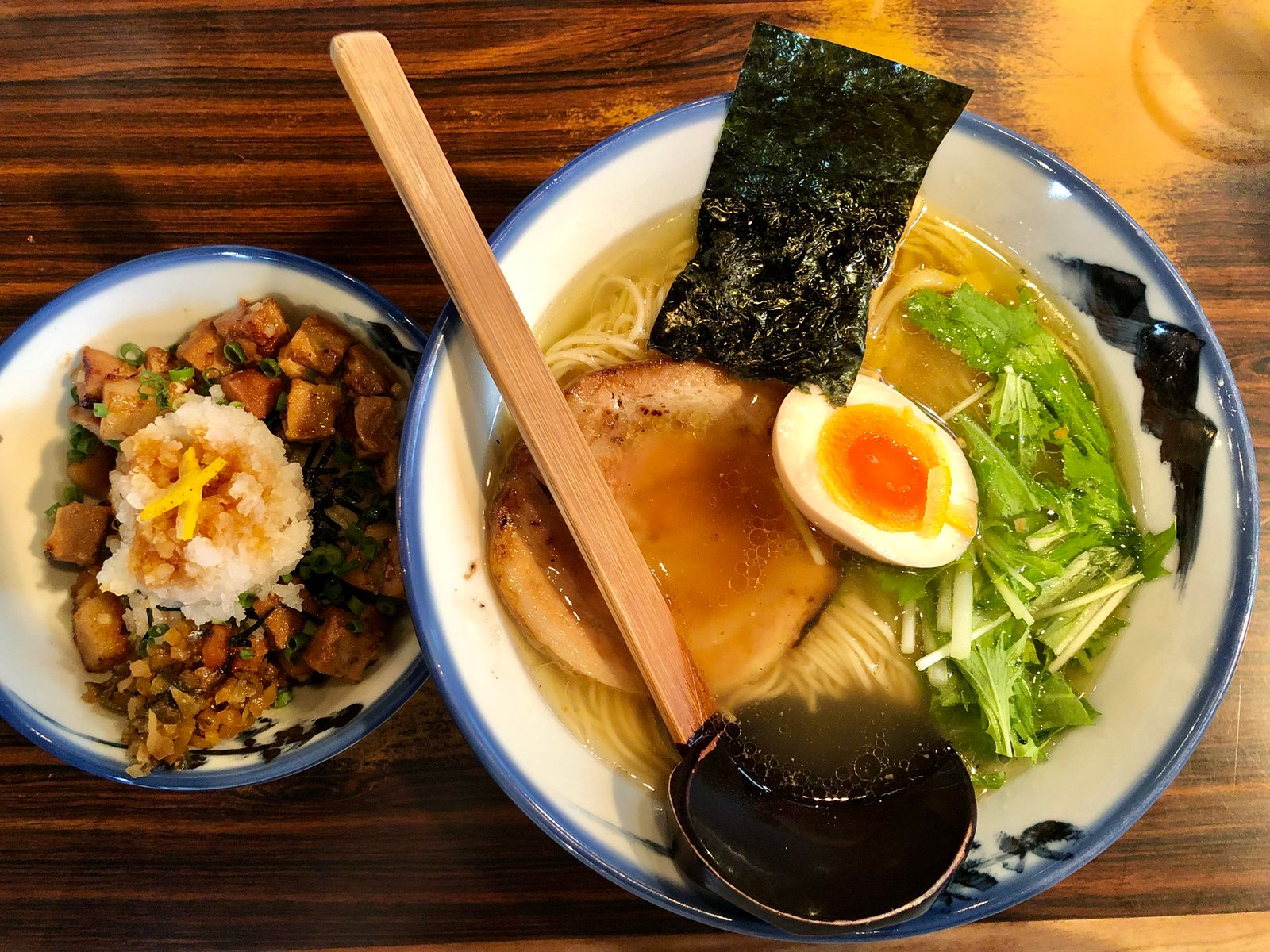
Tokyo ramen ranges from the rich, heavy tonkotsu and miso styles most people know to lighter, more delicate broths that are just as rewarding. If you’ve only had the heavier styles, the lighter end of the spectrum is worth exploring.
Where we went: Afuri 阿夫利 | Multiple locations including Harajuku, Shinjuku, and Ebisu
Afuri specializes in yuzu shio ramen – a light, fragrant chicken broth seasoned with salt and finished with fresh yuzu citrus. The broth is made from whole chickens (no pork bone), which gives it clarity and depth without weight. The yuzu adds a floral, citrusy brightness that cuts through the richness and lifts the whole bowl. We left feeling satisfied rather than full – a different experience from the more traditional styles.
Beef Katsu
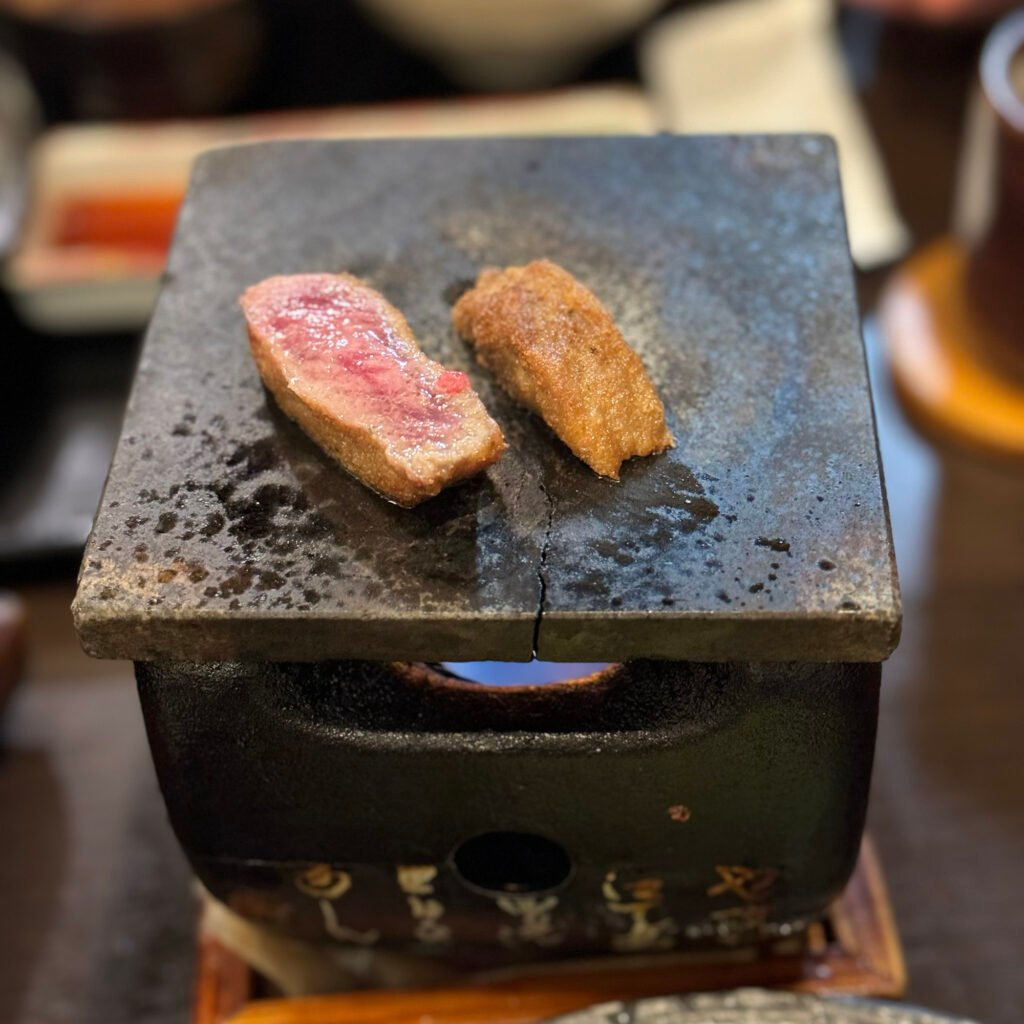
Gyukatsu is beef cutlet – rarer, more tender, and in many ways more interesting than its pork counterpart tonkatsu. The best versions are fried briefly so the exterior is crisp while the inside stays pink, then served on a hot stone so you finish cooking it to your preferred doneness tableside.
Where we went: Gyukatsu Ichi Ni San 牛かつ壱弐参 | Akihabara
This is a tiny basement spot (11 seats) near our hotel that we stumbled into largely because of the queue outside – always a good sign. The set arrives with a rare-fried beef cutlet, a hot stone plate, free-refill rice, cabbage, and miso soup. You cook the beef yourself: sear it further or eat it pink.
Shabu Shabu
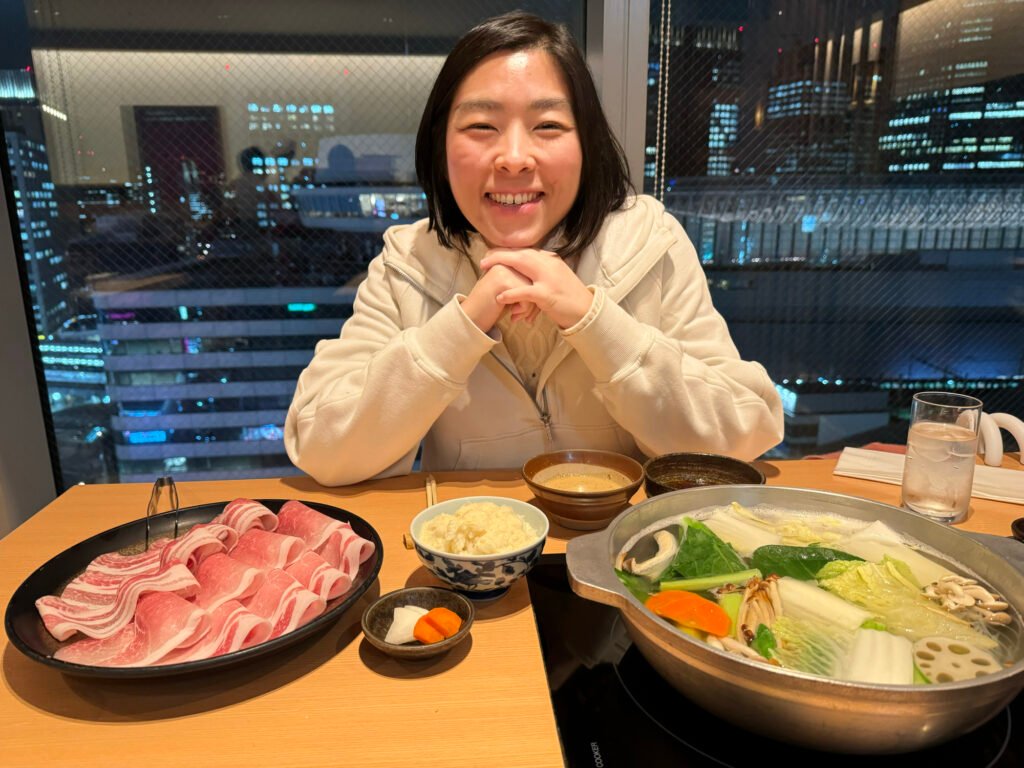
Shabu shabu – thin-sliced meat swirled briefly in a simmering broth, then dipped in sesame or ponzu sauce – is one of the best formats for eating a proper meal in Japan. It’s also one of the few reliable ways to get vegetables at dinner, which as tourists eating our way through Tokyo, we found surprisingly hard to come by.
Where we went: Ginza Shabutsu Yoshinosasa 銀座しゃぶ通 吉野笹 | Ginza
A nice environment in Ginza – not the cheapest option, but a good one. The broth was clean, the meat was well-sourced, and the variety of vegetables that came alongside made the whole meal feel more balanced than most of what we’d eaten that week. It’s also particularly well-suited to rainy evenings: warm, unhurried, the kind of meal that makes you happy to be inside.
Practical Tips for Early Spring
- When to go for kawazu-zakura: Mid-February to mid-March, depending on the year. By late March, most kawazu-zakura will have finished blooming and the somei yoshino season begins.
- What to expect: Smaller, fewer trees than peak season. No crowds at the sakura spots themselves (though tourist areas like Harajuku and Shinjuku are always busy). A more intimate experience overall.
- The weather: Early March in Tokyo is frequently rainy and overcast. Pack layers, bring a small umbrella, and reframe the grey skies as atmosphere rather than obstacle. We found the rain made everything better – quieter streets, richer colors, fewer selfie sticks.
- Neighborhoods to stay in: We stayed in Akihabara and would recommend it – it’s central, well-connected, and more affordable than some of the flashier areas. Other popular options: Shinjuku and Shibuya for convenience and nightlife, Ginza for a more upscale base, and Nihonbashi (日本橋) for a quieter, historic neighborhood that’s still well-positioned for getting around.
- Getting around: IC cards (Suica or Pasmo) are essential, as they work on all trains, subways, and buses. Tokyo’s train network is excellent and rarely confusing once you have Google Maps running. Note: As of 2024, physical Suica cards can be hard to find due to chip shortages. I recommend adding a digital Suica or Pasmo to your Apple or Google Wallet before you arrive.
Final Thoughts
Tokyo in early spring, before the famous bloom, is a gentler city than its reputation suggests. The kawazu-zakura won’t give you the wall-to-wall pink of peak season, but they offer something much rarer: a sense of private viewing.
The shrine tucked off a quiet street. The garden almost entirely to ourselves on a cloudy afternoon. The neighborhood a friend pointed you toward a year earlier that you loved so much to return and share. The rainy mornings under a 7-Eleven awning with a warm onigiri, watching a perfect, quiet scene unfold across the street.
In a city of millions, finding those pockets of stillness is the real gift. You realize that you didn’t need the “perfect” timing or the famous crowds after all.
That’s plenty.
Planning a trip to Japan in early spring? Or have you chased early sakura somewhere unexpected? We’d love to hear in the comments.
Happy Travelling!


Leave a Reply